Skateboard fans love a good contest. The crowd noise, the clack of boards, and the thrill of a clean landing all add up to a great day out. If you plan to attend the Fountain Hills Skateboard Classic 2027, you will want to know which tricks to watch for. This guide explains them in plain language. You will learn what each trick looks like, why it matters, and how to spot a great run.
Fountain Hills, Arizona, has built a loyal skate community in recent years. Local riders, rising teens, and visiting skaters gather at the park to test their skills. Whether you ride yourself or just enjoy the show, this list will help you get more from every minute.
Why Trick Watching Makes the Event So Special
Skateboarding looks simple from far away. A rider pushes, jumps, and lands. However, each trick hides dozens of small moves. Feet shift in a split second. The board spins, flips, or slides. The rider then lands and rolls away.
When you know what to look for, the show changes. You start to see the effort behind each move. Additionally, you can cheer at the right moments. Therefore, a little knowledge makes the day far more fun.
Tricks also tell a story. A rider might start with a safe move to find a rhythm. Next, the rider adds spin or height. Finally, the rider goes for a big finish. That build-up keeps the crowd on its feet.
What to Know Before You Go
The town has run this contest for several years at Desert Vista Skate Park. In 2026, the event took place on January 31. Riders paid a twenty dollar entry fee and signed up ahead of time. The contest offered a cash prize of up to five hundred dollars. Spectators watched for free.
Organizers have not yet shared every detail for the 2027 edition. Therefore, check the official Town of Fountain Hills events page before you plan your day. Dates, times, and rules can change from year to year.
Here is a quick snapshot of what the most recent event offered:
| Detail | What the 2026 event offered |
| Location | Desert Vista Skate Park, Fountain Hills, Arizona |
| Rider entry | Twenty dollars with pre-registration |
| Spectator entry | Free |
| Top prize | Up to five hundred dollars |
| Best viewing time | Afternoon session |
Please confirm all details for 2027 on the official town website before you go.
Flat-Ground Tricks Worth Watching
Flat-ground tricks form the base of street skating. They need no ramp or rail. The rider works only with the board and the pavement. Because of that, they show pure board control.
The Ollie
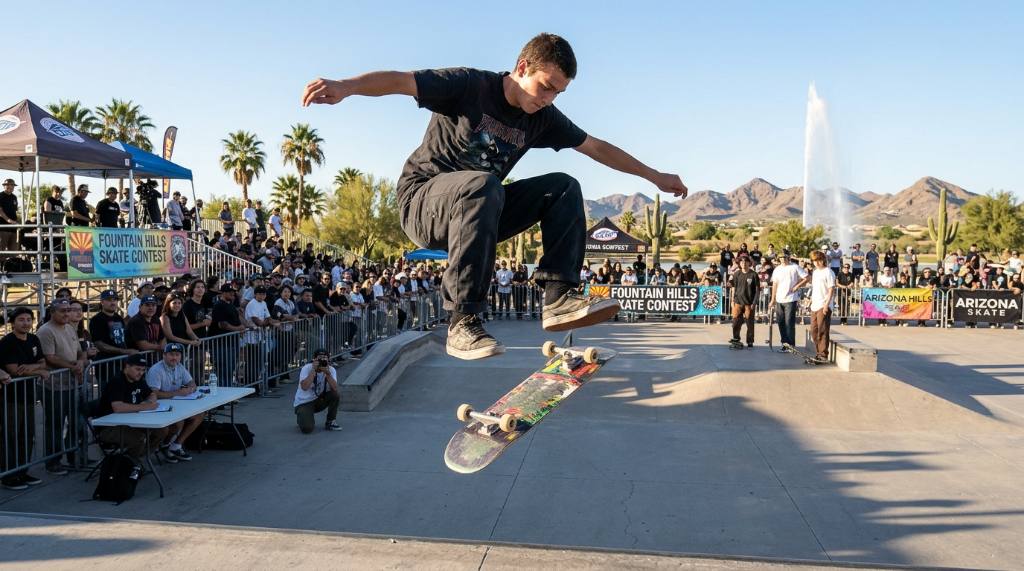
The ollie is the first trick most skaters learn. The rider stomps the tail, slides the front foot forward, and lifts the board into the air without using hands. It looks easy. However, a high, smooth ollie takes years to perfect.
Watch the height and the landing. A strong ollie rises straight up, levels out, and drops softly. The wheels hit the ground at the same time. Moreover, the rider rolls away without a wobble.
The Kickflip
The kickflip is the crowd favorite. The rider flicks the board with the front foot, and it spins once along its length. Then the rider catches it with both feet and lands.
A great kickflip looks clean and quick. The board spins close to the rider’s feet. In addition, the rider keeps a calm upper body. Look for flips done at speed or over a gap, because those raise the difficulty.
The Heelflip
The heelflip mirrors the kickflip. The rider uses the heel to spin the board the other way. Many skaters find it harder to control. As a result, a smooth heelflip earns extra respect from the crowd.
Tip: Watch the rider’s front foot. It swings out and back in a fast arc. That motion starts the spin.
The Pop Shove-It
In a pop shove-it, the board spins flat beneath the rider, usually a half turn. The rider jumps while the board turns, then lands back on top. It looks like magic. The board seems to rotate on its own.
A bigger version, the 360 shove-it, spins the board a full turn. Therefore, it needs more precise timing.
The 360 Flip
The 360 flip combines a kickflip with a full shove-it spin. The board flips and spins at once. Many fans call it the most beautiful trick in street skating. When a rider lands it clean, the board looks like it floats.
In contrast to simpler tricks, a 360 flip shows high skill. Expect big cheers when someone lands one.
The Hardflip
The hardflip mixes a frontside pop shove-it with a kickflip. The board turns in a unique, rolling way. Few riders land it cleanly in a contest. Consequently, it often becomes a highlight of the day.
Grinds and Slides: Sparks and Sound
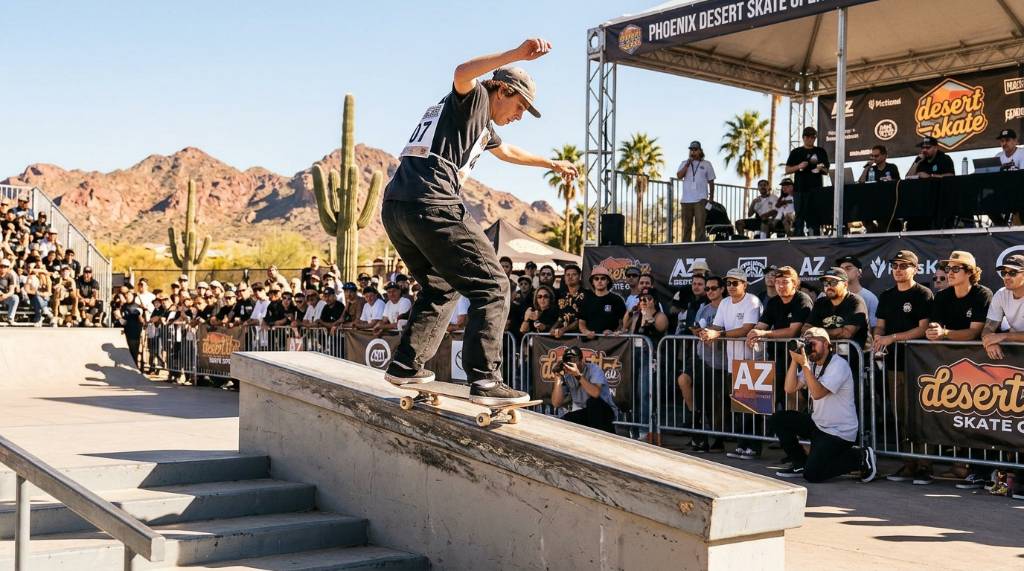
Grinds and slides happen on rails, ledges, and edges. The rider jumps onto the obstacle and slides along it. You can hear these tricks before you see them. A loud, steady scrape means the rider locked in.
The 50-50 Grind
In a 50-50 grind, both trucks, which are the metal parts holding the wheels, slide along the edge. The board stays straight. It is the simplest grind. However, riders make it hard by using tall rails or long ledges.
Watch how the rider hops on and off. A strong rider lands on the edge without a pause. Then the rider holds balance until the very end.
The Boardslide
In a boardslide, the rider turns sideways and slides the middle of the board along the edge. The wheels hang over the side. It looks smooth and calm. In addition, it flows well into other tricks.
A rider who slides to the end and spins off in a clean turn earns style points.
The 5-0 Grind
The 5-0 grind uses only the back truck. The rider balances on one axle while the front of the board floats up. Therefore, it needs strong balance and nerves.
This trick looks bold on a high ledge. Keep your eyes on the rider’s knees. They stay bent to steady the board.
The Noseslide and Tailslide
In a noseslide, the front tip of the board slides along the edge. A tailslide does the same with the back end. Both tricks look dramatic because the board tilts at a sharp angle. Moreover, riders often add a spin on the way out.
The Crooked Grind
The crooked grind is a nose grind with the board angled slightly. It gives a rough, powerful look. Skaters with strong style love it. As a result, it often shows up in the best runs of the day.
Here is a quick guide to the main grinds and slides:
| Trick | Part of board that slides | Difficulty | What to watch |
| 50-50 grind | Both trucks | Easy to medium | Clean entry and exit |
| Boardslide | Middle of the board | Medium | Smooth, steady slide |
| 5-0 grind | Back truck only | Medium to hard | Balance on the edge |
| Noseslide | Front tip | Medium to hard | Sharp tilt and control |
| Tailslide | Back end | Medium to hard | Controlled drop out |
| Crooked grind | Front truck, angled | Hard | Style and board angle |
Transition and Air Tricks
Transition tricks use curved walls, banks, and bowls. The rider builds speed and flies off the edge. These tricks show flow and height. They also bring a different feel to the contest, because the rider moves in long, sweeping lines.
The Frontside Air
The rider launches off a wall, grabs the board, and turns in the air. Then the rider drops back in. A great frontside air shows height, a firm grab, and a smooth landing.
Height is the main thing to watch. The higher the rider flies above the edge, the louder the crowd gets.
The Rock to Fakie
The rider rolls up a wall, rocks the front truck over the top edge, and rolls back down in reverse. It is a classic move. It looks gentle, yet it takes good timing. Beginners practice it, and pros use it as a stylish link between bigger tricks.
The Backside Air
In a backside air, the rider turns away from the wall. The rider cannot see the landing during the turn. Because of that, it takes courage. Look for riders who grab the board hard and stay tight in the air.
The Axle Stall
The rider lands both trucks on top of the wall and pauses for a moment. Then the rider drops back in. It shows perfect control and balance. Furthermore, a long stall earns approval from every judge.
Technical Tricks That Impress Judges
Some tricks look small but show great skill. Judges love them because they take practice and calm nerves.
The Manual
A manual is a wheelie on a skateboard. The rider balances on the back wheels and rolls along. Long manuals show extreme control. Skaters often use them to link tricks into a flowing line.
Watch how long the rider holds the balance. Ten seconds of steady rolling is very rare.
Nollie Tricks
A nollie works like an ollie, but the rider pops from the nose instead of the tail. Therefore, all feet movements flip around. A nollie kickflip or nollie heelflip looks sharp and fresh. Many fans do not notice the difference at first. However, the best riders make nollies look as high as normal tricks.
Switch Tricks
Switch means riding in the opposite stance. A right-handed rider turns into a left-handed one. It sounds easy, but every move feels new. In short, a switch trick is like writing with your weak hand. When a rider lands a switch kickflip, the crowd usually roars.
The Bigspin
The bigspin mixes a board spin with a body spin. The rider turns the body half a circle while the board spins a full turn the other way. It looks wild. Additionally, it demands great timing. Consequently, it makes for a strong show piece.
Combos and Lines: The Real Show
Single tricks are great. Yet the best runs link several tricks into one smooth line. A line might start with an ollie, move to a grind, add a flip, and end with a manual.
Judges reward lines that use the whole park. They also love variety. A rider who uses grinds, flips, and transition moves will usually score higher than one who repeats the same move.
Here is a simple look at how a strong line often builds:
| Stage | What the rider does | Why it works |
| Opening | Fast push and a clean ollie | Shows control and builds speed |
| Middle | Grind or slide on a rail or ledge | Adds sound and risk |
| Big move | Flip trick or spin | Shows technical skill |
| Finish | Manual or air with a clean landing | Leaves a strong final image |
How to Tell a Great Trick From a Good One
You do not need to be a pro to judge a run. Instead, look for a few easy signs.
- Height: Does the rider clear the obstacle with room to spare?
- Landing: Do the wheels land flat and roll away smoothly?
- Style: Does the rider look relaxed and in control?
- Difficulty: Does the rider try a hard trick or a safer one?
- Variety: Does the rider mix different kinds of tricks?
- Consistency: Does the rider keep landing tricks, run after run?
In addition, watch the rider’s face and body. Calm shoulders and steady eyes often signal a clean trick. Tense arms and a fast scramble usually signal a close call.
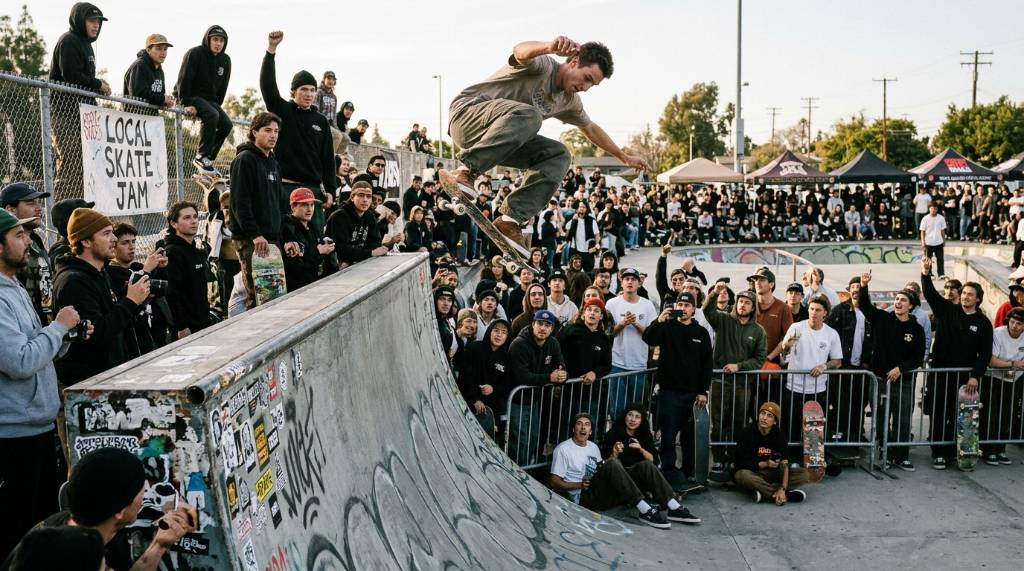
Tips for Spectators
A little planning goes a long way. Fountain Hills often brings warm, sunny weather, even in winter. Therefore, pack sunscreen, a hat, and water. Wear comfortable shoes too, because you may stand for hours.
Arrive early to find a good view. Spots near the rails and ledges give you the best look at grinds. Meanwhile, spots near the bowl or wall help you see the big air tricks. Bring a small folding chair if the site allows it.
Additionally, remember that skate parks are tight spaces. Keep a safe distance from the riding area. Stay alert, because a loose board can fly out at any time. Always follow the staff’s directions.
Finally, cheer for everyone. Falls happen to every skater, even pros. A loud clap after a slam helps the rider get back up and try again. That spirit makes a local contest feel warm and special.
Support Local Skaters
Local skate events give young riders a place to grow. Many contestants started on the same park and learned from nearby coaches. When you attend, you help the community. Furthermore, you may meet a future star before the world does.
After the contest, say hello to the riders. Most love to share tips and talk about their favorite tricks. Parents, kids, and curious beginners all find a friendly crowd.
Conclusion
The best part of a skate contest is the surprise. You never know which rider will land a bold move next. Still, you can prepare by learning the main tricks. Flat-ground moves like the kickflip and 360 flip show pure board control. Grinds and slides bring sound and risk. Transition tricks add height and flow. Technical moves, such as manuals and switch tricks, show deep skill.
Remember to look for clean landings, strong style, and smart lines. Additionally, pack for the weather, give riders space, and cheer for everyone. Above all, check the official town page for fresh dates and rules. With this guide in hand, you can enjoy the Fountain Hills Skateboard Classic 2027 like a true fan.
10 Popular FAQs About Skateboard Tricks and the Event
1. What is the most exciting trick to watch at a skate contest?
Many fans say the 360 flip and the hardflip are the most exciting. Both mix flipping and spinning in one move. Big air tricks on a wall also thrill the crowd.
2. Do I need to know skateboarding to enjoy the event?
No. The tricks look great even if you have never stood on a board. This guide gives you enough basics to follow along.
3. Is it free to watch the contest?
In 2026, spectators watched for free, and riders paid a twenty dollar entry fee. Check the official town page for 2027 prices.
4. Where did the most recent contest take place?
The town held it at Desert Vista Skate Park in Fountain Hills, Arizona.
5. What time should I arrive?
Come early to claim a good spot. Check the official schedule once the town posts it, because start times can shift each year.
6. What is the easiest trick to spot?
The ollie is the easiest. The board lifts off the ground without hands. Every other trick builds on it.
7. What is the difference between a grind and a slide?
In a grind, the metal trucks scrape the edge. In a slide, the body of the board slides along it.
8. How do judges score the tricks?
Judges look at difficulty, style, height, variety, and clean landings. Smooth lines that use the whole park often score best.
9. Can kids and beginners enter the contest?
In past years, riders needed to pre-register. Rules on age and skill groups can change, so read the entry details on the official page.
10. What should I bring as a spectator?
Bring water, sunscreen, a hat, and comfortable shoes. A camera helps too, but keep a safe distance from the riding area.