Skateboarding is more than just a sport. It is a form of expression, a way of life, and a skill that takes real effort to develop. However, one thing many beginners overlook is how much the right combination of parts matters. Choosing parts that work well together can make a huge difference in how your board feels and performs.
Therefore, whether you are just starting out or looking to upgrade your setup, understanding how to match skateboard parts is essential. This guide will walk you through everything you need to know to build a board that offers perfect balance and control.
Why Matching Parts Matters
Many skaters focus only on looks when choosing their setup. However, the size, weight, and style of each part directly affect how the board rides. A mismatch between your deck, trucks, and wheels can lead to wobbling, poor turning, and even falls.
Additionally, the right parts help you learn faster. When your board feels natural under your feet, tricks become easier to land. You spend less time fighting your equipment and more time improving your skills.
Starting with the Deck
The deck is the foundation of your skateboard. Everything else is built around it, so it is the best place to start when planning your setup.
Choosing the Right Deck Width
Deck width is measured in inches. Most standard decks range from 7.5 to 8.5 inches wide. Narrower boards, around 7.5 to 7.75 inches, are great for technical street skating. Wider boards, around 8.0 to 8.5 inches, offer more stability and are better for transition or vert skating.
Your shoe size can also guide your choice. Skaters with smaller feet generally feel more comfortable on narrower decks, while those with larger feet may prefer wider options. Therefore, always try to match your deck to your body and your style of skating.
Understanding Deck Length and Shape
Beyond width, the shape of the deck matters too. Different brands offer varying nose and tail shapes, concave levels, and wheelbase lengths. A steeper concave gives you more control over flip tricks. A flatter concave feels more comfortable for cruising.
Additionally, the wheelbase, which is the distance between the truck mounting holes, affects how quickly the board turns. A shorter wheelbase makes the board more responsive, while a longer one adds stability at higher speeds.
Matching Trucks to Your Deck
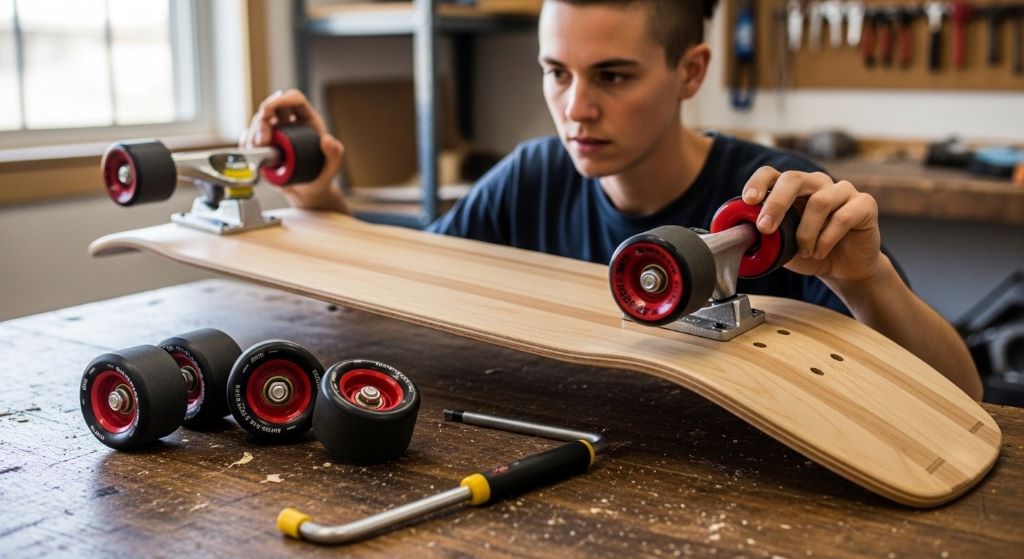
Trucks are the metal axles that connect your wheels to the deck. Getting the right trucks is one of the most important steps in building a balanced skateboard.
Truck Width and Deck Width
The axle width of your trucks should closely match the width of your deck. For example, if you ride an 8.0-inch deck, you should aim for trucks with an axle width of around 8.0 inches. Going too wide or too narrow will cause the board to feel unbalanced and harder to control.
Most truck brands list their sizes by hanger width and axle width. It is important to check both measurements before buying. A small difference of up to a quarter inch is usually fine, but anything beyond that can affect your ride noticeably.
Truck Height
Trucks also come in different heights: low, mid, and high. Low trucks keep you closer to the ground, which gives you more board control and is ideal for technical skating. High trucks offer more wheel clearance, which allows you to use larger wheels without wheel bite.
Therefore, your choice of truck height should also depend on your wheel size. Matching these two components properly prevents the wheels from rubbing against the deck during turns, which can cause sudden stops.
Selecting the Right Wheels
Wheels affect how fast you go, how smooth your ride feels, and how well you grip the surface beneath you. They come in two main variables: size and hardness.
Wheel Size
Wheel size is measured in millimeters. Smaller wheels, around 50 to 53mm, are great for street skating because they are light and allow for quick flip tricks. Larger wheels, from 54mm to 60mm, are better for cruising, ramps, and rough surfaces because they roll faster and absorb bumps more easily.
However, keep in mind that larger wheels need higher trucks or riser pads to prevent wheel bite. This is why matching your wheel size to your truck height is so important.
Wheel Hardness
Wheel hardness is measured on the durometer scale. A rating between 99A and 101A is considered hard, which is best for smooth surfaces and tricks. Softer wheels, around 78A to 87A, offer more grip and cushion, making them ideal for rough pavement or longboarding.
For most street and park skaters, a wheel hardness between 99A and 101A works well. Additionally, softer wheels can slow you down on smooth surfaces, so consider the terrain you skate most often when making your choice.

Choosing the Right Bearings
Bearings sit inside your wheels and allow them to spin freely. They are rated using the ABEC scale, which ranges from 1 to 9. Higher numbers mean tighter tolerances and potentially smoother spins, though in skateboarding, ABEC 7 bearings are generally considered the sweet spot for most riders.
However, the ABEC rating is not the only factor. The quality of the materials and lubrication also matter. Ceramic bearings last longer and spin faster than steel ones, though they cost more. Therefore, if you skate frequently, investing in quality bearings can save you money in the long run.
Keep in mind that bearings are a universal size. They fit any skateboard wheel, so compatibility is not a concern. However, proper cleaning and occasional lubrication will keep them spinning smoothly for longer.
The Role of Hardware and Risers
Hardware refers to the bolts and nuts that hold your trucks to the deck. They may seem minor, but using the wrong size can cause problems. Standard hardware is 7/8 inch long. If you use riser pads, you need longer bolts.
Riser pads are plastic pieces that go between the truck and the deck. They raise the height of the trucks and help prevent wheel bite when using larger wheels. Additionally, they absorb some shock, which can make your ride feel smoother.
Building a Balanced Setup for Your Style
Now that you understand each component, it helps to think about how they all come together based on your skating style. Here is a simple breakdown:
- Street skating: 7.5 to 7.75-inch deck, low trucks, 50 to 52mm hard wheels
- Park and transition skating: 8.0 to 8.25-inch deck, mid trucks, 52 to 56mm hard wheels
- Vert skating: 8.25 to 8.5-inch deck, high trucks, 54 to 60mm wheels
- Cruising: 8.0 to 8.5-inch deck, high trucks, 56 to 60mm soft wheels
Of course, personal preference plays a big role. Therefore, do not be afraid to experiment. Many experienced skaters adjust their setups over time until they find what feels right for them.
Tips for Beginners
If you are just starting out, it can feel overwhelming to choose parts on your own. However, a complete setup from a reputable skate shop is a great starting point. These are designed so that all parts already work well together.
Additionally, do not be tempted to buy the cheapest option available. Low-quality parts can make learning harder and may wear out quickly. Instead, invest in a mid-range setup and upgrade individual parts as you progress and learn what you prefer.
It also helps to ask for advice at your local skate shop. The staff are usually skaters themselves and can guide you based on your experience level, shoe size, and skating goals.
Conclusion
Matching skateboard parts correctly is one of the most important things you can do to improve your performance and enjoyment on the board. Each part plays a role in how the skateboard feels and responds, and they all work best when chosen with the others in mind.
Start with the right deck width for your style, then match your trucks to your deck and your wheels to your trucks. Choose bearings that spin smoothly and hardware that fits your setup. Additionally, always consider the surfaces you skate most often when making your choices.
Therefore, take your time when building or upgrading your setup. A well-matched skateboard will not only feel better but will also help you learn faster and skate with more confidence. The right combination of parts truly can make all the difference.
Frequently Asked Questions
1. What size trucks should I get for an 8.0-inch deck?
You should look for trucks with an axle width of around 8.0 inches. Trucks that are within a quarter inch of your deck width on either side will still work well. The goal is to have the axles line up closely with the edges of your deck for the best balance and control.
2. Do wheel size and truck height need to match?
Yes, they should be considered together. If you use large wheels with low trucks, you risk wheel bite, which is when the wheel touches the deck during a turn and causes a sudden stop. Use high trucks or riser pads with larger wheels to avoid this problem.
3. What wheel hardness is best for street skating?
For street skating on smooth concrete or skateparks, a durometer rating between 99A and 101A is ideal. Hard wheels allow for faster slides and smoother flip tricks. However, if you skate on rough asphalt, consider a slightly softer wheel around 95A to absorb vibrations.
4. How often should I replace my bearings?
Bearings do not have a fixed replacement schedule. However, if your wheels feel slow, make noise, or feel rough when you spin them, it is time to clean or replace your bearings. Regular cleaning and lubrication can extend their life significantly. Most skaters replace bearings every few months with regular use.
5. Can I mix parts from different brands?
Yes, you can mix parts from different brands without any issues. The key is to match the sizes correctly, not the brands. For example, a deck from one brand will work perfectly with trucks from another, as long as the widths are compatible. Therefore, focus on measurements first and brand preference second.
Related Topics:
Lights, Cameras, Action! Mounting Gear on Your Skateboard Deck: A Comprehensive Guide
LED Skateboard Lighting Systems: The Ultimate Guide to Illuminating Your Ride