Learning to stand on a skateboard can feel intimidating for beginners. However, mastering this fundamental skill is entirely achievable with the right approach and practice. This comprehensive guide will help you confidently step onto your skateboard without fear of falling.
Understanding Why Balance Matters
Balance is the foundation of skateboarding. Your body needs to adjust to the board’s movement and find its center of gravity. Unlike standing on solid ground, a skateboard moves beneath your feet.
The key difference is that skateboards have wheels that roll in multiple directions. Therefore, your muscles must constantly make tiny adjustments. These adjustments become automatic with practice, but initially require conscious effort.
According to NBC News, skateboarding improves coordination and balance while providing excellent exercise. Starting with proper standing technique builds a strong foundation for future skills.
Choosing the Right Practice Location
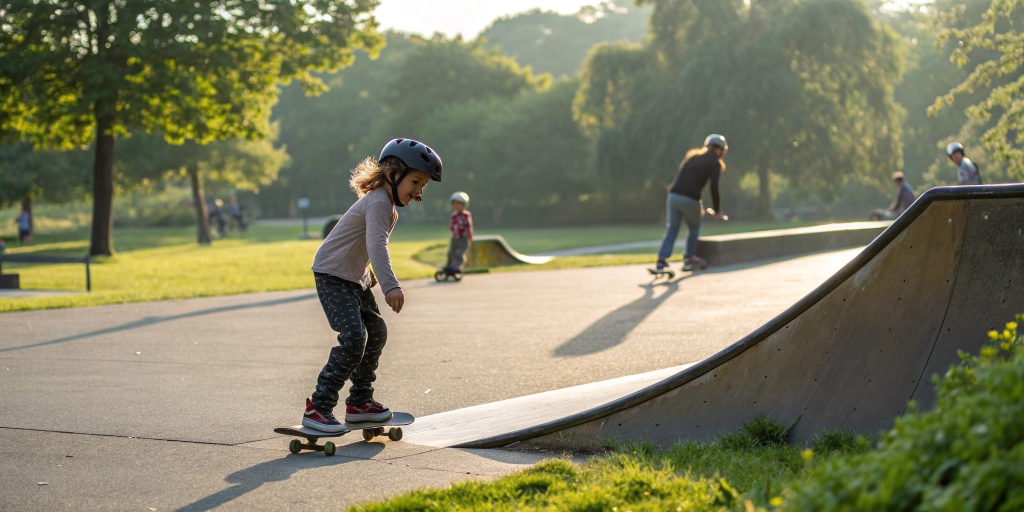
Your practice location significantly impacts your learning experience. Select a flat, smooth surface with plenty of open space. Avoid areas with cracks, pebbles, or debris that could stop your wheels unexpectedly.
Indoor spaces like empty garages or basketball courts work excellently. Outdoor locations such as tennis courts or smooth parking lots also provide ideal surfaces. Additionally, look for areas away from traffic and pedestrians.
Check that the ground is level without slopes or inclines. Even gentle slopes can cause unwanted movement while you are learning to balance. Furthermore, ensure adequate lighting so you can see the surface clearly.
Grass provides a safe alternative for absolute beginners. Place your skateboard on grass to prevent rolling while you practice foot placement. This method lets you focus purely on stance without worrying about movement.
Wearing Proper Safety Gear
Safety gear protects you from injuries during the learning process. Never skip protective equipment, especially when starting out. Even experienced skateboarders wear safety gear for good reason.
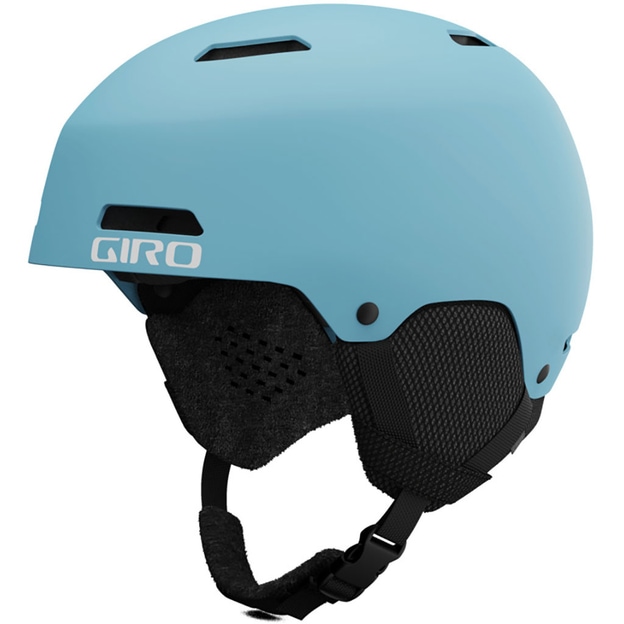
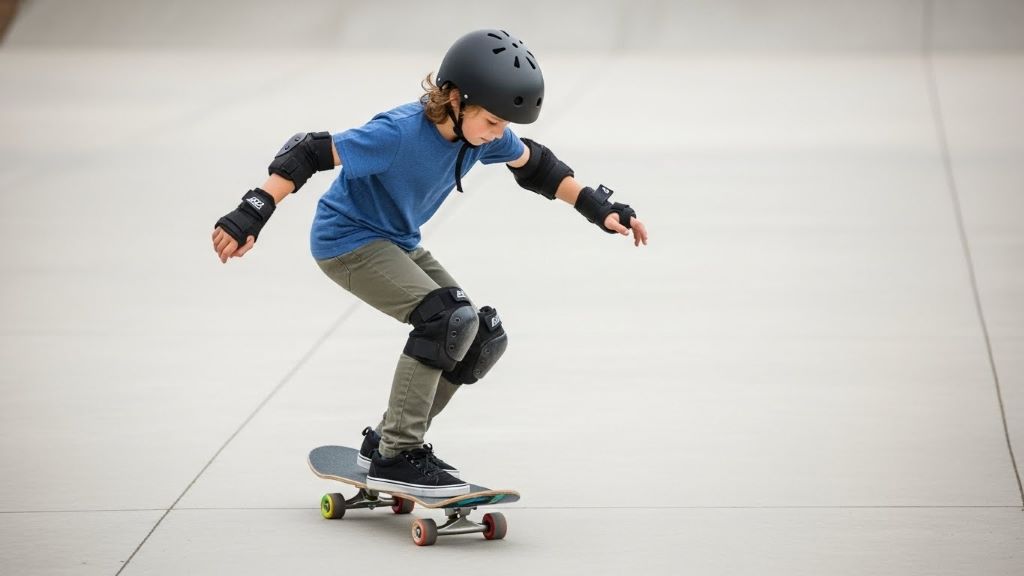
Essential gear includes a properly fitted helmet, wrist guards, knee pads, and elbow pads. The helmet should sit level on your head and fasten securely under your chin. Wrist guards prevent common injuries from catching yourself during falls.
Knee pads and elbow pads cushion impacts if you do fall. Choose pads that fit snugly without restricting movement. Comfortable gear encourages you to wear it consistently during practice sessions.
Wear closed-toe shoes with flat soles and good grip. Skateboarding shoes work best, but any athletic shoe with a flat bottom suffices. Avoid sandals, flip-flops, or shoes with thick, cushioned soles that reduce board feel.
Determining Your Stance
Your stance refers to which foot leads when standing on the skateboard. Most people are either regular or goofy. Regular stance means your left foot leads, while goofy stance means your right foot leads.
Finding your natural stance is simple. Have someone gently push you from behind when you are not expecting it. The foot you step forward with is likely your leading foot. Alternatively, try sliding across a smooth floor in socks. Your leading foot naturally goes forward.
Neither stance is better than the other. Choose whichever feels most comfortable and natural. Forcing an unnatural stance makes learning more difficult. Therefore, trust your instincts about which foot should lead.
Positioning the Skateboard Correctly
Place your skateboard on a flat surface where it will not roll. Initially, practicing on grass or carpet prevents unwanted movement. Position the board perpendicular to your body with the grip tape facing up.
Stand beside the skateboard with your leading foot closest to it. The board should align roughly with your shoulders. This positioning makes stepping onto the board easier and more natural.
Check that the skateboard is not damaged or wobbly. Wheels should spin freely without catching. Trucks should be secure and not excessively loose. A stable board increases your confidence during initial attempts.
Stepping onto the Skateboard
Begin with your weight on your back foot while standing beside the board. Place your leading foot on the board above the front trucks. The trucks are the metal parts that hold the wheels.
Position your leading foot at a slight angle, roughly 45 degrees. Your toes should point somewhat forward rather than completely sideways. This angle provides better balance and control.
Keep most of your weight on your back foot initially. Gradually shift weight onto your leading foot as it settles into position. Move slowly and deliberately rather than rushing the process.
Once your leading foot feels stable, prepare to bring your back foot onto the board. This step requires commitment but should be controlled. Additionally, keep your knees slightly bent throughout the process.
Place your back foot over the rear trucks. Position it perpendicular to the board, with your toes pointing toward the side. This stance provides stability and control over board movement.

Finding Your Center of Balance
Your center of balance sits roughly over the middle of the skateboard. Distribute your weight evenly between both feet initially. Imagine a line running down the center of the board beneath you.
Keep your knees bent and your upper body relatively upright. Bent knees act as shock absorbers and allow for quick adjustments. Meanwhile, an upright posture helps maintain overall balance.
Your arms should hang naturally at your sides or extend slightly for balance. Avoid crossing your arms or putting your hands in your pockets. Free arms help you make quick balance corrections.
Focus your eyes forward rather than down at your feet. Looking ahead improves balance by engaging your body’s natural stabilization systems. However, occasional quick glances at foot placement are acceptable initially.
Practicing Weight Distribution
Weight distribution determines how the skateboard responds beneath you. Shifting weight forward makes the board tip toward the nose. Shifting backward tips it toward the tail.
Practice subtle weight shifts while standing still. Lean slightly forward and feel the board respond. Then lean slightly backward. These small movements teach you how the board reacts to your body.
Keep your weight centered between both feet for maximum stability. Equal distribution prevents the board from tipping unexpectedly. Additionally, this position gives you options for movement in any direction.
Try lifting one foot slightly while maintaining balance on the other. This exercise builds confidence in your ability to control the board with one foot. Start with very small lifts lasting only a second.
Using Your Arms for Balance
Your arms play a crucial role in maintaining balance. Extend them outward when you feel unstable. This movement shifts your center of gravity and helps prevent falls.
Windmill your arms in circular motions if you start to lose balance. This technique creates momentum that can help you recover stability. Similarly, quick arm movements can counterbalance body shifts.
Keep your arms relaxed rather than stiff or rigid. Tension in your arms travels to your entire body, making balance harder. Loose, responsive arms adjust naturally to maintain equilibrium.
Practice standing with different arm positions. Try arms at your sides, slightly extended, or fully extended. Each position feels different and teaches you how arm placement affects balance.
Building Confidence Through Repetition
Repetition is essential for developing muscle memory and confidence. Step on and off your skateboard repeatedly. This simple exercise reduces fear and increases familiarity.
Start by standing for just five seconds, then step off. Gradually increase the duration as you feel more comfortable. Soon, standing for 30 seconds or a minute will feel natural.
Practice multiple short sessions rather than one long, exhausting session. Frequent practice with rest in between prevents fatigue and maintains focus. Therefore, aim for several 10 to 15 minute sessions daily.
According to ESPN, consistent practice is key to skateboarding success. Building skills gradually through regular practice prevents injuries and accelerates learning.
Progressing to Rolling Practice
Once you feel comfortable standing still, introduce gentle rolling. Push your skateboard very slowly across smooth, flat ground. Keep one foot on the board while pushing with the other.
Give yourself a gentle push and place both feet on the board while moving slowly. Moving actually makes balance easier for most people. The forward momentum creates stability similar to riding a bicycle.
Start with very short rolling distances of just a few feet. Gradually increase the distance as your confidence grows. Additionally, practice stepping off the board smoothly while it is moving slowly.
Always practice in open areas away from obstacles initially. Clear space gives you room to roll without worrying about hitting anything. This freedom helps you focus purely on balance.
Common Mistakes to Avoid
Many beginners make similar mistakes that hinder progress. Standing too upright with locked knees reduces stability and prevents quick adjustments. Remember to keep your knees slightly bent at all times.
Looking down at your feet constantly throws off your balance. Train yourself to look forward and trust your feet to find the right position. Your peripheral vision shows foot placement without direct focus.
Tensing your entire body makes balancing harder. Stay relaxed, especially in your shoulders and arms. Tension restricts natural movement and balance corrections. Furthermore, relaxed muscles respond faster to imbalances.
Rushing the learning process leads to frustration and potential injuries. Progress at your own pace without comparing yourself to others. Everyone learns at different speeds, and that variation is completely normal.
Dealing with Fear of Falling
Fear of falling is natural and actually helpful in small amounts. This fear keeps you cautious and aware of your surroundings. However, excessive fear prevents you from progressing.
Accept that small falls might happen during the learning process. Wearing proper safety gear significantly reduces injury risk from minor falls. Most beginning falls are quite gentle and cause no harm.
Practice falling safely on soft surfaces like grass or mats. Learn to roll with falls rather than catching yourself with stiff arms. This technique distributes impact across your body rather than concentrating it in your wrists.
Visualize success before each attempt. Imagine yourself standing confidently and maintaining balance. Positive visualization improves performance and reduces anxiety about potential failure.
Exercises to Improve Balance Off the Board
Improving your general balance helps skateboarding skills. Practice standing on one foot while brushing your teeth or waiting in line. These simple exercises strengthen stabilizer muscles.
Try balancing on a pillow or balance board. These unstable surfaces mimic skateboard movement and train your body to make quick adjustments. Additionally, yoga poses like tree pose develop balance and body awareness.
Strengthen your core muscles through planks and similar exercises. A strong core provides stability for your entire body. Therefore, core strength translates directly to better skateboard balance.
Practice activities that challenge your coordination, such as jumping rope or playing catch while standing on one foot. These exercises improve overall body control and awareness.
Setting Realistic Goals
Set achievable goals for each practice session. Your first goal might simply be standing on the board for five seconds. The next could be ten seconds, then twenty.
Celebrate small victories along the way. Each successful attempt builds confidence and motivation. Recognizing progress, no matter how small, keeps you engaged in the learning process.
Avoid comparing your progress to others, especially experienced skateboarders. Everyone starts as a beginner and learns at their own pace. Furthermore, focusing on personal improvement rather than comparison reduces frustration.
Write down your goals and track your progress. Seeing improvement on paper provides tangible evidence of your developing skills. This record also helps you identify areas needing more practice.
Conclusion
Learning to stand on a skateboard for the first time requires patience, practice, and proper technique. By choosing safe practice locations, wearing protective gear, and finding your natural stance, you set yourself up for success. Remember to keep your knees bent, your weight centered, and your eyes looking forward. Start with stationary practice before progressing to gentle rolling, and always work at your own pace. With consistent practice and the right approach, standing on a skateboard will soon feel as natural as standing on solid ground. The key is building confidence through gradual progression while maintaining a focus on safety and proper form.
Frequently Asked Questions
How long does it take to learn to stand on a skateboard?
Most beginners can comfortably stand on a stationary skateboard within one to three practice sessions. However, standing while moving may take several days or weeks of practice. Everyone learns at different speeds depending on natural balance ability and practice frequency.
Is it easier to balance on a moving or stationary skateboard?
Balancing on a moving skateboard is generally easier than balancing on a stationary one. Forward momentum creates stability similar to riding a bicycle. However, beginners should master stationary standing first to build confidence before introducing movement.
What should I do if I start falling off the skateboard?
If you start falling, step off the board quickly rather than trying to save yourself while on it. Practice stepping off smoothly in different directions. Additionally, learn to bend your knees and roll with falls rather than catching yourself with stiff arms.
Can adults learn to stand on a skateboard or is it only for kids?
Adults can absolutely learn to stand on a skateboard at any age. While children may learn faster due to lower fear levels, adults succeed with proper instruction and practice. Many people start skateboarding in their 30s, 40s, or even older with excellent results.
Do I need an expensive skateboard to learn basic standing?
No, you do not need an expensive skateboard to learn basic standing. Any complete skateboard in good working condition suffices for beginners. However, avoid very cheap toy skateboards from department stores, as they often have poor quality components that make learning harder.
Related Topics:
How Do Measure Wheelbase? A Complete Guide to Skateboard Dimensions