Street surfing skateboards have revolutionized the way people ride. Unlike traditional skateboards, these innovative boards allow riders to glide forward without constantly pushing off the ground. This unique feature has made them incredibly popular among children, teenagers, and adults alike. However, many people wonder how this is possible and what makes these boards so different from conventional skateboards.
Understanding the Street Surfing Skateboard Design
Street surfing skateboards, also known as caster boards or waveboard skateboards, feature a distinctive two-platform design. The board splits into two separate deck sections connected by a torsion bar. Additionally, each platform sits on a single caster wheel that can rotate 360 degrees. This construction fundamentally changes how the board moves and how riders generate momentum.
The caster wheels are the key to the pushing-free experience. These wheels swivel freely, allowing them to change direction instantly. Therefore, riders can create forward motion through body movements alone. The flexibility of the torsion bar enables the two platforms to twist independently, which contributes to the board’s unique riding style.
The Physics Behind Push-Free Riding
The secret to riding without pushing lies in the principle of generating momentum through body motion. When a rider twists their hips and shifts their weight from side to side, they create a wave-like motion. This movement transfers energy to the board, propelling it forward. Consequently, the board moves without the rider’s foot ever touching the ground.
This technique resembles the motion of a fish swimming through water. The rider essentially creates an S-shaped pattern of movement that generates thrust. Furthermore, the rotating caster wheels convert the lateral twisting motion into forward momentum. The physics involved are similar to how a swing can be pumped to go higher without anyone pushing from behind.
According to research on alternative transportation methods, these types ofboards utilize angular momentum and weight transfer to maintain motion. The rider becomes the engine, using their body as the power source rather than relying on pushing off the pavement.
Mastering the Wiggling Technique
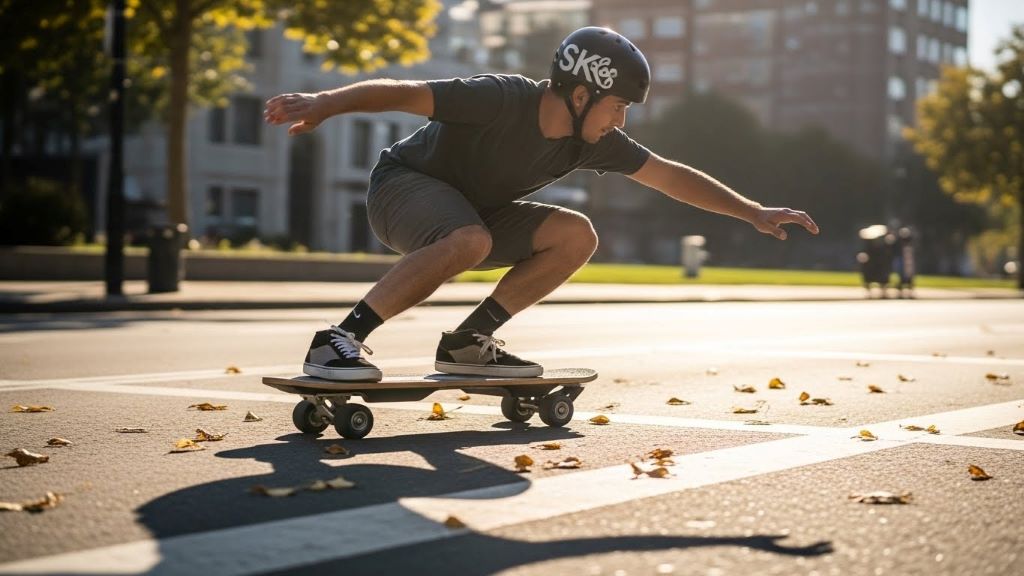
Learning to ride a street surfing skateboard requires understanding the wiggling or carving technique. Initially, riders stand with one foot on each platform. Then, they begin twisting their upper body and hips in a rhythmic motion. The key is to create smooth, flowing movements rather than jerky or abrupt shifts.
The front foot typically guides the direction while the back foot provides the power. Additionally, riders must learn to coordinate their upper and lower body movements. This coordination takes practice, but most people can learn the basic technique within an hour or two. Moreover, once mastered, the motion becomes second nature and feels almost effortless.
Starting from a stationary position requires a slightly different approach. Riders usually give themselves a small initial push or begin on a gentle slope. However, once moving, they can maintain and increase speed indefinitely through the wiggling motion alone. Therefore, continuous pushing becomes unnecessary.
Advantages Over Traditional Skateboards
Street surfing skateboards offer several benefits compared to conventional skateboards. First and foremost, they provide a more efficient riding experience. Riders do not need to stop and push repeatedly, which means they can cover longer distances with less effort. This makes them excellent for commuting or recreational riding.
The continuous motion also creates a smoother, more flowing ride. Unlike traditional skateboarding, where speed fluctuates between pushes, street surfing maintains consistent momentum. Furthermore, the wiggling motion provides a low-impact workout that engages core muscles, legs, and improves balance.
Another advantage is the tighter turning radius. The dual-pivot design allows riders to make sharp turns and navigate crowded spaces more easily. Additionally, the unique riding style attracts attention and provides a fun, surf-like experience on pavement. Many riders describe the sensation as similar to snowboarding or surfing, hence the name street surfing.

Building Speed Without Pushing
Generating and maintaining speed on a street surfing skateboard depends entirely on technique. The faster and more vigorously a rider twists and carves, the more speed they can build. However, the motion must remain smooth and controlled to be effective. Jerky movements often slow the board down rather than speeding it up.
Experienced riders can reach impressive speeds by perfecting their carving technique. The continuous generation of momentum means riders never lose speed due to coasting between pushes. Therefore, street surfing skateboards can actually be faster than traditional skateboards for riders who master the technique.
Going downhill requires minimal effort since gravity assists the motion. Conversely, going uphill demands more vigorous wiggling and stronger weight shifts. Nevertheless, skilled riders can climb moderate inclines without stepping off the board. This versatility makes street surfing skateboards practical for various terrains.
Safety Considerations and Learning Curve
While street surfing skateboards eliminate the need for pushing, they do present a learning curve. New riders must develop balance and coordination specific to this riding style. Initially, many people find the twisting motion awkward or challenging. However, persistence typically leads to success within a few practice sessions.
Safety equipment remains essential when learning to ride. Helmets, knee pads, and elbow pads protect against falls during the learning process. Additionally, beginners should practice in open, flat areas away from traffic and obstacles. Starting on smooth pavement helps riders focus on technique without worrying about rough surfaces.
The Consumer Product Safety Commission recommends proper protective gear for all wheeled sports activities. Taking precautions seriously helps prevent injuries and builds confidence during the learning phase.
Comparing Different Street Surfing Models
Various brands manufacture street surfing skateboards with subtle design differences. Some models feature wider platforms for increased stability, while others prioritize maneuverability with narrower decks. The quality of bearings and wheels also affects performance significantly.
Higher-quality models typically offer smoother rides and more responsive handling. Additionally, some boards include features like shock absorption or reinforced torsion bars for durability. When choosing a street surfing skateboard, riders should consider their skill level, intended use, and body size.
Children’s models often have lower weight limits and smaller platforms, while adult versions accommodate larger riders. Furthermore, some boards come with adjustable features that allow customization as skills improve. Investing in a quality board makes learning easier and enhances the overall riding experience.
Environmental and Health Benefits
Street surfing skateboards provide an eco-friendly transportation alternative. They produce zero emissions and require no fuel or electricity. Therefore, they contribute to reducing carbon footprints when used for short trips instead of driving. Many urban commuters have embraced these boards as a sustainable transportation option.
The health benefits extend beyond environmental impact. Riding a street surfing skateboard provides cardiovascular exercise while strengthening core and leg muscles. The constant balancing and twisting motion engages multiple muscle groups simultaneously. Moreover, the low-impact nature makes it suitable for people of various fitness levels.
Regular riding improves coordination, balance, and spatial awareness. These benefits make street surfing skateboards appealing for both recreation and fitness. Additionally, the fun factor encourages consistent use, unlike traditional exercise routines that some people find monotonous.
Conclusion
Street surfing skateboards have transformed personal transportation and recreation through their innovative push-free design. The unique two-platform construction with caster wheels allows riders to generate momentum through body motion alone. By mastering the wiggling technique, riders can travel efficiently without ever pushing off the ground. This design offers numerous advantages including continuous speed, improved maneuverability, and an engaging full-body workout. While there is a learning curve, most people can quickly grasp the basic technique with practice and patience. Whether for commuting, exercise, or pure enjoyment, street surfing skateboards provide a distinctive and efficient riding experience that sets them apart from traditional skateboards.
Frequently Asked Questions
How long does it take to learn to ride a street surfing skateboard?
Most people can learn the basic wiggling motion within one to two hours of practice. However, becoming proficient and confident typically takes several practice sessions over a few days or weeks. The learning curve varies based on prior experience with board sports and individual coordination skills.
Can you ride a street surfing skateboard uphill?
Yes, riders can go uphill on street surfing skateboards by using more vigorous wiggling motions and stronger weight shifts. Moderate inclines are manageable for experienced riders, though steep hills may prove challenging. The technique requires more energy than riding on flat surfaces but remains possible without pushing.
Are street surfing skateboards suitable for all ages?
Street surfing skateboards work well for children, teenagers, and adults. However, riders should choose models appropriate for their weight and size. Most manufacturers specify age ranges and weight limits for their products. Young children may need more time to develop the coordination required for effective riding.
Do street surfing skateboards work on all surfaces?
These boards perform best on smooth, paved surfaces like sidewalks, bike paths, and parking lots. Rough terrain, gravel, or grass significantly impedes performance and makes riding difficult or impossible. The caster wheels are designed for hard, even surfaces to function optimally.
How fast can you go on a street surfing skateboard?
Speed depends on rider skill, technique, and terrain. Experienced riders can reach speeds comparable to traditional skateboards, typically between 10 to 15 miles per hour on flat ground. Downhill riding can result in higher speeds, though riders should always prioritize safety and maintain control.
Related Topics:
JJMOLLE Turtle Skateboard Mini – Fun, Safe, and Smooth Ride for Small Pets Review
Perfect Starter Board: Meketec 22” Retro Skateboard Review