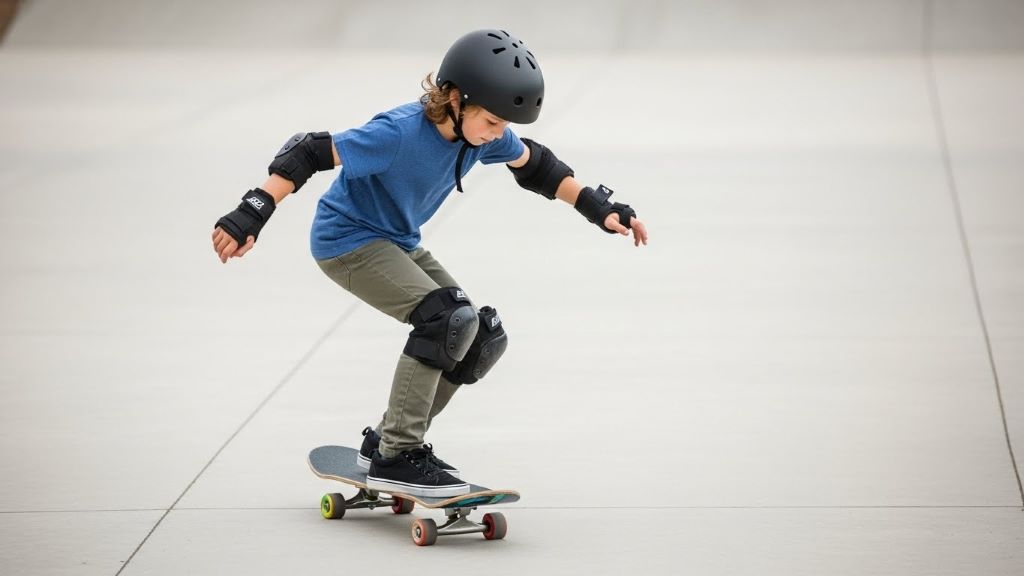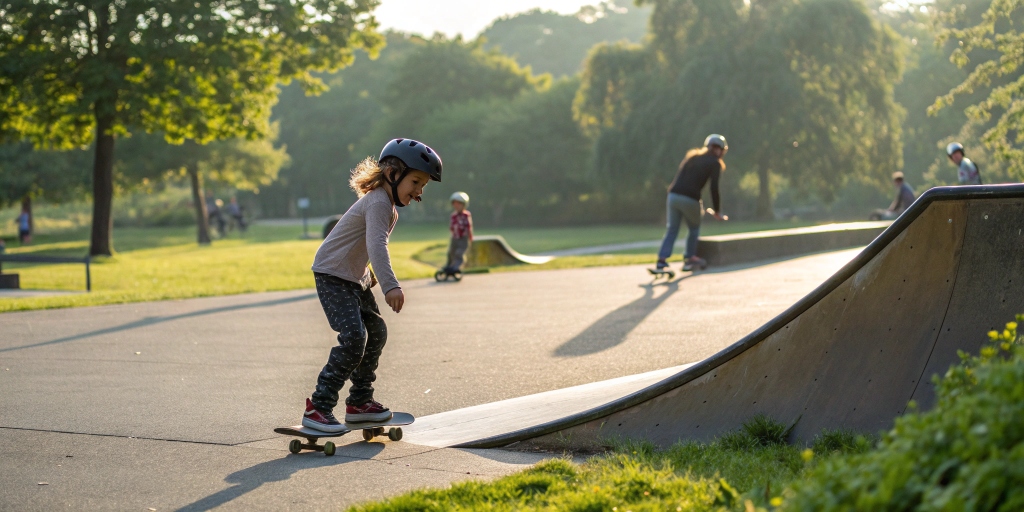
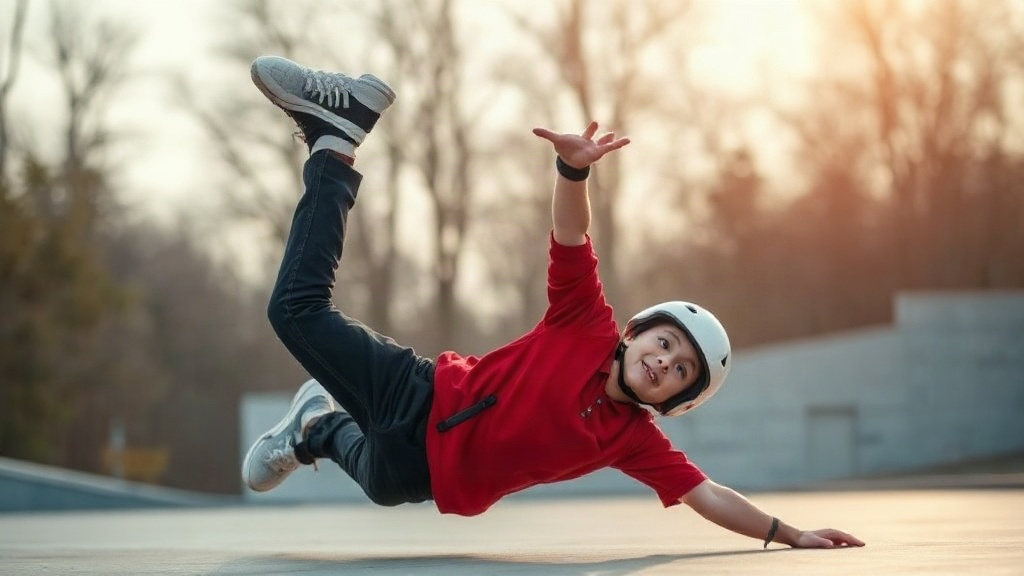
Every skater, climber, and martial artist remembers the first trick that finally worked. Fewer remember the first time they learned to fall on purpose. Yet the question worth asking is simple: which skill keeps you progressing longer? Why Learning to Fall Is Just as Important as Learning Your First Trick comes down to one idea — the fall is the part of every attempt you cannot skip.
Quick answer: Learn to fall before you chase harder tricks. Practice safe falling on soft surfaces, tuck your chin, spread the impact, and treat each tumble as a skill you rehearse. Falling well reduces fear and injury, which lets you attempt more tricks and recover faster.
This article explains what safe falling means, how the skill works, real examples from different sports, common myths, and practical answers to the questions beginners ask most.
Definition and background
Falling well is a trainable skill, not a personality trait. Coaches call it “fall technique” or “breakfall training.” It means arranging your body during a loss of balance so the impact spreads across strong areas instead of concentrating on a wrist, tailbone, or head.
The concept has deep roots. Judo and aikido teach breakfalls from the first lesson, because a student who fears landing cannot commit to a throw. Skateboarders learn to bail, climbers learn to fall on a rope, and skiers learn to fall sideways rather than backward. Each tradition reached the same conclusion: the landing is part of the move.
Beginners often reverse the order. They spend weeks drilling a first trick and almost no time rehearsing what happens when it fails. The result is predictable. A new trick arrives with a scary, uncontrolled fall, and the fear of that fall slows every future attempt.
Falling is also statistically normal. Any skill built on balance and momentum includes failed attempts. If roughly half of your early tries end on the ground, then the ground is where you spend real time. Training for it makes sense.
There is a useful analogy in driving. New drivers learn braking and emergency stops before highway speed. Falling is the emergency stop of balance sports — the skill you hope to use rarely but must have ready.
The same principle appears in swimming and cycling, where safety skills are taught before performance skills. A swimmer learns to float and recover before racing strokes; a cyclist learns to stop and dismount before sprinting. In every case, the ability to handle a failure is treated as a prerequisite, not an afterthought. Balance sports simply make that failure more visible, because the ground is right there waiting.
This ordering reflects how motor learning actually works. Skills learned under calm, controlled conditions transfer more reliably to high-pressure moments than skills learned in a rush. Rehearsing the fall first gives beginners a safe default their body can fall back on when balance fails.
Fear of falling often limits progress more than lack of talent. A practiced fall removes the worst-case scenario from your mind, so you commit fully to the trick.
How Why Learning to Fall Is Just as Important as Learning Your First Trick works
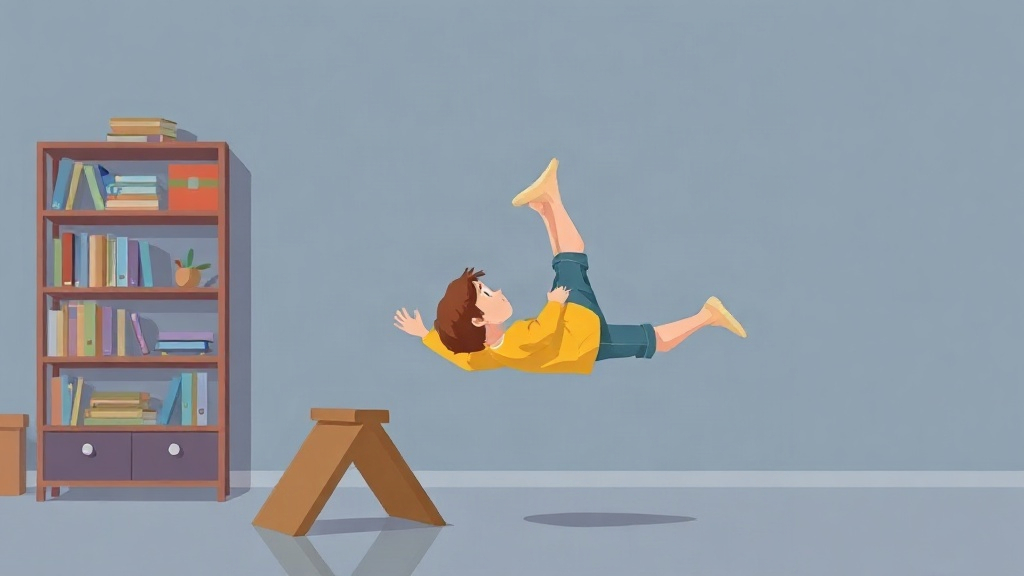
The mechanism is simple: a controlled fall protects your body, and a protected body keeps training. Two forces drive this effect. The first is physical. Learning to roll, tuck, and distribute force turns a hard impact into a glancing one. The second is mental. When you know how to land, your brain stops treating every attempt as a threat.
Most safe falls follow a short sequence:
- Tuck your chin so the back of your head never strikes first.
- Exhale as you go down; a relaxed body absorbs more than a braced one.
- Spread the impact across forearms, thighs, or a rolling shoulder rather than one joint.
- Stay loose and let momentum carry you instead of fighting it.
Practice happens on soft ground first — mats, grass, or a foam pit. You repeat the motion slowly until it becomes automatic. Coaches often call this “grooving” the pattern. Once the pattern is set, it appears without conscious thought during a real fall.
The psychological side matters just as much. A skater who knows how to bail will try a ledge trick ten more times than one who fears a wrist fracture. That extra repetition is what actually produces skill. Falling practice, in other words, buys you attempts.
There is a trade-off worth naming. Time spent on falling drills is time not spent on tricks. Beginners sometimes resent the detour. The payoff shows up later, when injuries drop and confidence holds steady through a learning plateau.
| Approach | Early progress | Injury risk | Long-term retention |
|---|---|---|---|
| Tricks only | Fast at first | Higher | Slows after first scare |
| Falling plus tricks | Slightly slower | Lower | Steady and durable |
The table shows the core trade-off: a small early delay in exchange for fewer setbacks later. Notice that neither column promises instant mastery. The difference is how often you keep going.
Over a season, that difference compounds. A skater who avoids injury skips the weeks lost to recovery and the confidence dip that follows. Each avoided setback keeps the practice habit intact, so the cumulative gap between the two approaches widens month after month.
Real-world examples
Concrete examples show how this plays out across sports.
Skateboarding. A beginner learning an ollie will fall backward when the board shoots forward. Riders who practice stepping off and rolling onto a shoulder recover in seconds. Those who stiff-arm the ground often sprain a wrist and stop skating for weeks.
Climbing. Gym climbers learn to fall on a rope before they lead-climb. The drill is deliberate: let go, keep your feet forward, and absorb the catch with bent knees. A climber who flinches and grabs the rope risks swinging into the wall.
Skiing and snowboarding. Instructors teach beginners to fall uphill and to release tension on impact. A relaxed fall on a snowy slope rarely causes injury. A rigid fall with an outstretched hand can break a thumb.
Martial arts. Judo students spend their first sessions learning to be thrown safely. The breakfall comes before any throwing technique. This ordering is deliberate and has survived for over a century.
Parkour and gymnastics. Traceurs practice landings and rolls on grass before attempting drops. Gymnasts drill falls into foam pits long before competition.
A pattern emerges across every example. The sports with formal fall training produce calmer beginners. Calm beginners take more attempts. More attempts produce better skills. The fall is not a distraction from progress — it is part of the engine that drives it.
Snowboarders offer a particularly clear case. Beginners who instinctively sit down when they lose balance land on padding rather than an outstretched wrist, so instructors often teach a deliberate “sit-down bail” in the first hour. Riders who master it spend the rest of the lesson standing up quickly and trying the turn again, while those who fight the fall spend the lesson recovering from a jarred arm. The difference in total attempts by the end of a single session is often dramatic.
Cyclists follow a similar logic. Mountain-bike coaches teach riders to push the bike away and roll rather than grip the bars during a crash. The instinct to hold on is strong, but it drags the rider down with the frame. Riders who practice the release on grass handle real crashes with far less shoulder and collarbone damage.
Common misconceptions
Several myths keep beginners from practicing falls, and each one deserves a direct answer.
“Falling well means you are being reckless.” The opposite is true. Controlled falling practice is cautious and deliberate. You rehearse on mats at low speed, then gradually raise the difficulty.
“If I learn to fall, I will fall more often.” Nothing about fall training encourages mistakes. It simply makes the mistakes you already make less costly.
“Falling is instinctive; you cannot train it.” Instinct often makes things worse. The natural reaction is to stiffen and reach out with a hand, which concentrates impact on a small joint. Trained responses override that reflex.
“Only beginners need to practice falling.” Advanced athletes fall from higher speeds and greater heights. The skill matters more as difficulty rises, not less.
“You need expensive equipment to practice safely.” A mat, soft grass, or a foam pit is enough to start. Coaching helps, but a few simple drills cost nothing.
Never practice falls on concrete, near traffic, or without warming up. If you have an existing injury or a medical condition, check with a professional before starting.
A subtler myth is that falling practice will make you fearful by drawing attention to danger. In practice, the reverse happens. Rehearsing the worst case reduces its power. The unknown is scarier than the familiar.
Another persistent myth is that fall training is only for high-impact or extreme sports. In reality, everyday activities like running on uneven trails, cycling on wet pavement, or stepping off a curb carry the same risk of a hard landing. A runner who has rehearsed rolling out of a stumble avoids the instinctive stiff-arm that breaks wrists. The skill transfers far beyond the gym or the slope.
Some beginners also assume that once they can fall, they no longer need to warm up or build strength. Fall technique reduces injury risk; it does not erase it. Strong legs, mobile joints, and a proper warm-up still do much of the protective work. Treat falling practice as one layer of a broader safety habit, not a substitute for conditioning.
FAQ
How long does it take to learn safe falling?
Most beginners learn the basic tuck-and-roll pattern in a few short sessions. Fluency under real speed takes longer, often several weeks of regular practice. Consistency matters more than total hours.
Is fall training worth the time if I only do casual sport?
Yes, because casual sessions still involve losses of balance. A ten-minute drill once a week is enough to build the habit. The payoff is fewer sprains and more confidence.
Do I need a coach to learn to fall safely?
A coach speeds up the process and corrects mistakes early. You can start with basic drills on soft ground alone. For higher-speed sports, professional guidance reduces risk.
What is the most common falling mistake?
Stiffening the body and reaching out with a straight arm. That posture concentrates force on the wrist or elbow. Tucking and staying loose spreads the impact instead.
Can practicing falls cause injury?
It can if you practice on hard ground or at high speed too soon. Start slow on soft surfaces and progress gradually. Stop at the first sign of pain.
Conclusion
The core lesson is straightforward. Falling is a skill you rehearse, not a failure you endure. Athletes who train it protect their bodies, calm their nerves, and keep attempting the tricks that build real ability. Why Learning to Fall Is Just as Important as Learning Your First Trick is that the fall and the trick belong to the same skill set.
Your next step is concrete. Before your next session, spend ten minutes on a mat or patch of grass practicing a tuck and a controlled roll. Add a short fall drill to every warm-up from then on, and watch how much more freely you commit to new attempts.