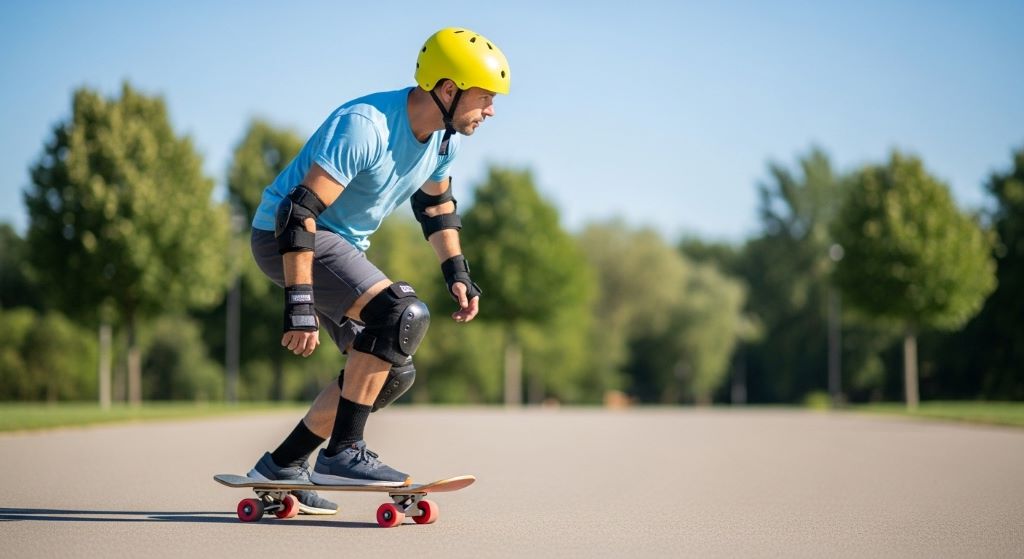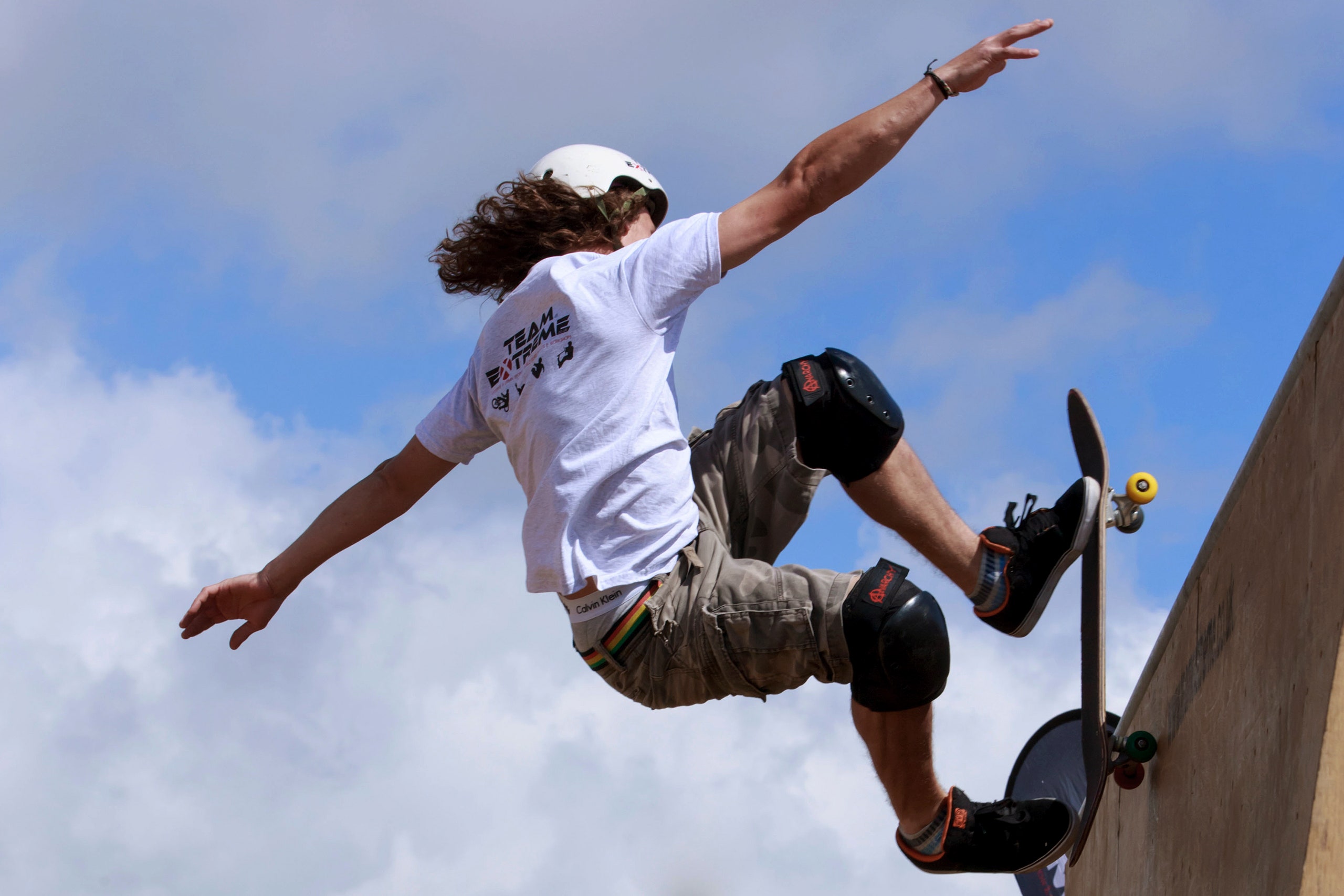
You can push, turn, and stop without thinking, yet the skatepark still feels like someone else’s territory. That gap between rolling comfortably and landing your first trick is where most beginners stall. Skateboard Progression: When Should Beginners Move From Cruising to Tricks? is the question that decides whether you stay stuck or start landing tricks.
Quick answer: Move to tricks once you can cruise for 10–15 minutes without falling, push and turn both directions, and lift your front wheels over a crack on command. Most beginners reach that point in two to three months of regular riding. Balance comes first, tricks second.
This guide ranks the readiness signs that matter, in order of importance. You will learn which skills to check off before your first ollie and how to avoid the mistakes that set riders back.
Our picks at a glance
Not every milestone deserves equal weight. Some signal real control, and others simply mean you have ridden for a while. The entries below are ranked by how strongly each one predicts that you can learn tricks safely and with less frustration.
| Rank | Readiness sign | Why it matters most |
|---|---|---|
| 1 | Comfortable, controlled cruising | Tricks require a stable rolling platform |
| 2 | Confident board control and balance | Carving and weight shifts mirror trick mechanics |
| 3 | Flat-ground fundamentals (tic-tacs, kickturns) | Builds the board feel an ollie depends on |
| 4 | Physical durability with falls | Recovery keeps practice consistent |
| 5 | Gear and terrain readiness | Reduces injury risk and speeds learning |
| 6 | Right board setup | The wrong deck fights your progress |
Comparison: control before tricks vs. tricks before control
The table above ranks readiness signs; the comparison below shows why order matters. Notice that a rider who skips control spends more time recovering from slams than landing tricks.
| Approach | Typical outcome |
|---|---|
| Control first, then tricks | Steady trick progress with fewer injuries |
| Tricks before control | Repeated slams, slower learning, higher quit rate |
Riders who drill balance and board feel often land their first ollie sooner than those who jump straight to trick tutorials. Board time is the common thread. A rider who cruises 20 minutes daily builds board feel faster than one who practices once a week, even with equal natural talent.
The self-check tests below explain exactly what “control” looks like in practice.
Treat the two middle entries differently from the rest. Falling on a slanted shoulder or stiff knee is usually fixable inside a week of drilling, so those signs rarely justify delaying trick practice. Losing your balance on a simple glide, by contrast, points to a deeper gap that more flat-ground time will solve faster than any tutorial video.
Watch for the trap of ranking yourself by hours logged rather than by what those hours contained. A rider who spends six months pushing to the store and back has little in common with one who spent six weeks carving empty parking lots every evening. Board feel comes from varied, deliberate riding — turns, weight shifts, small obstacles — not from mileage alone.
Another useful comparison is practice quality on a bad surface versus a good one. Rough asphalt teaches you to absorb vibration and stay loose, which pays off later, but it is a poor place to learn balance at the edge of your ability. Smooth, empty pavement near a wall or railing lets you push your limits with a safety net close by.
Weather and footwear belong in the gear check too. Cold mornings stiffen ankles and make pavement slick, so schedule early trick sessions for afternoons. Flat-soled shoes with thin, grippy rubber let you feel the deck through the sole; a soft running shoe mutes that feedback and blunts your board feel right when you need it most.
Finally, remember that these signs are gates, not a scoreboard. Passing five of six is a strong position. The point of ranking them is to tell you which single weakness to drill for a week or two, not to hand out grades or invite comparisons with other riders at the park.
The list
Read the signs in order, but do not wait for a perfect score on every one before touching a board for trick practice. The top three carry the most weight because each one describes control you cannot fake under pressure. The lower entries smooth the path once the core skills are in place.
Each entry includes a quick way to test it yourself, so you can mark it pass or fail rather than relying on a gut feeling after a good session. Work down the list, note the first sign you cannot honestly pass, and start there.
1. You can cruise for 10–15 minutes without falling
This is the clearest green light. Steady cruising means your balance adjusts automatically while you push and turn. That automatic correction is the same skill an ollie asks of you. Falling constantly signals your body has not yet mapped the board.
2. You turn and carve in both directions
Riders who only turn their favored way develop lopsided weight shifts. Tricks require you to shift weight toward your back foot, then your front, often within a second. Carving both ways trains that transfer on safe ground. Spend a week carving figure eights before starting tricks.
3. You push, stop, and bail with confidence
Stopping without panic matters as much as starting. Practice pushing hard, then stopping smoothly with your back foot. Learn to step off while rolling. Riders who can bail safely attempt tricks with less hesitation, and hesitation causes most beginner slams.
A confident bail is a skill, not a failure. Learn the run-off before the ollie. Stepping off with bent knees beats landing awkwardly on a planted foot.
4. You own the flat-ground basics: tic-tacs and kickturns
Tic-tacs are fast rocking turns on your back wheels. Kickturns lift the front wheels and pivot 180 degrees. Both teach you to unweight the front of the board, which is exactly what starts an ollie. Riders who can chain ten tic-tacs usually pick up ollie mechanics quickly.
5. Your body can handle practice falls
Tricks involve repeated falls, so start when you can absorb a few slams without derailing the week. Learn how to fall by rolling instead of catching yourself with a straight arm. A basic pair of wrist guards buys you a lot of practice time.
Never skate tricks without a helmet if you are still learning to fall. A hard slam on a crack or curb can end a season.
6. Your board fits your goals
A soft, heavy cruiser absorbs pushes nicely but makes flip tricks nearly impossible. If tricks are the goal, move to a harder-wheeled, lighter deck for flat-ground practice. Keep the cruiser for commuting. Matching the board to the job removes a frustrating obstacle.
How to choose the right option
The ranked list tells you which skills matter. The harder question is how to know when a specific sign is met for you. Use these three checkpoints instead of guessing.
Run each checkpoint twice, on separate days, before you count it as passed. A single strong session can hide weak spots, and the second attempt in different conditions — windier, colder, or on unfamiliar pavement — tells you whether the skill has truly settled in.
Run the 10-minute self-test
Skate a flat, familiar path for 10 minutes without stopping. Try three things: push and glide, carve one direction and then the other, and roll over a small crack without stepping off. If you pass all three without a fall, start trick practice and keep cruising as your warm-up.
Match your schedule to your goal
If you ride twice a week, expect four to six months before solid trick attempts. Daily riders often see progress in two to three months. Choose a realistic timeline and track sessions rather than asking strangers online whether you are ready.
Set a clear learning order
Once you are ready, follow a sensible sequence:
- Ride first, tricks second. Ten minutes of cruising warms up your balance every session.
- Start with tic-tacs and kickturns. Drill these until they feel boring.
- Add the ollie on grass or carpet. Learn the foot motion before the rolling version.
- Move the ollie to concrete. Try it while rolling slowly on smooth pavement.
- Move to the skatepark after that.
Jumping from cruising straight to ramps multiplies risk, and most of that risk comes from poor control.
Watch for the readiness mistakes
Avoid these common errors:
- Chasing tricks the first week. Early tricks build bad habits that take months to fix.
- Switching boards mid-learning. Each setup changes your balance and timing.
- Skipping the warm-up. Cold muscles and a cold brain both make slams likelier.
- Practicing tired. Most crashes happen near the end of a session.
- Ignoring both feet. Train fakie and switch riding so your weaker side catches up.
Record a two-minute clip of your cruising and watch it back. Slanted shoulders and stiff knees show up on video long before you feel them.
Use a simple readiness checkpoint
Pick an honest yes/no check for each sign. If you fall on two or more of the six signs, keep cruising. Falling on one sign means you are close; drill that weak point for a week or two. This turns vague “am I ready” anxiety into a fixed list you can complete.
Riders often overestimate their control after a good day. Check back on a different day before committing to tricks. Once your signs pass, start with the ollie on flat ground and expect the first rolling attempts to feel awkward. That awkwardness is normal at this stage.
Gear choice deserves a final check. A stiffer deck, fresh bearings, and the right shoes all affect your learning speed.
FAQ
How long should a beginner cruise before learning tricks?
Most riders need two to three months of regular practice. Riding twice a week stretches that toward four to six months. Judge by the six readiness signs, not the calendar.
What trick should a beginner learn first?
The ollie is the foundation, but tic-tacs and kickturns come first. They teach the unweighting motion an ollie requires. Learn those on flat ground, then practice the ollie on grass before rolling.
Can I learn tricks on a cruiser board?
Flip tricks are very hard on a soft-wheeled cruiser. A cruiser suits tic-tacs and kickturns but not ollies. If tricks are your goal, add a lighter, harder-wheeled deck for practice.
Is a skatepark necessary to start tricks?
No. Flat, smooth pavement works for tic-tacs, kickturns, and the ollie. Move to a skatepark once your flat-ground basics are solid, and visit in the early morning when it is empty.
What safety gear do I need before trick attempts?
A helmet is the baseline. Wrist guards and knee pads are worth the cost during trick learning, when falls happen often. Shoes with flat soles and good grip protect your ankles too.
Conclusion
Skateboard Progression: When Should Beginners Move From Cruising to Tricks? comes down to control, not time served. You are ready when cruising, carving, turning, and bailing all feel automatic, and when tic-tacs and kickturns are already smooth. Riders who cross those checkpoints learn tricks steadily and fall less. The stronger point: build one skill on top of a solid foundation, and progress follows. Your next move is simple. Run the 10-minute self-test this week, note which signs you still fail, and drill that one weakness. If you pass every sign, grab your helmet, find flat pavement, and start practicing the ollie.