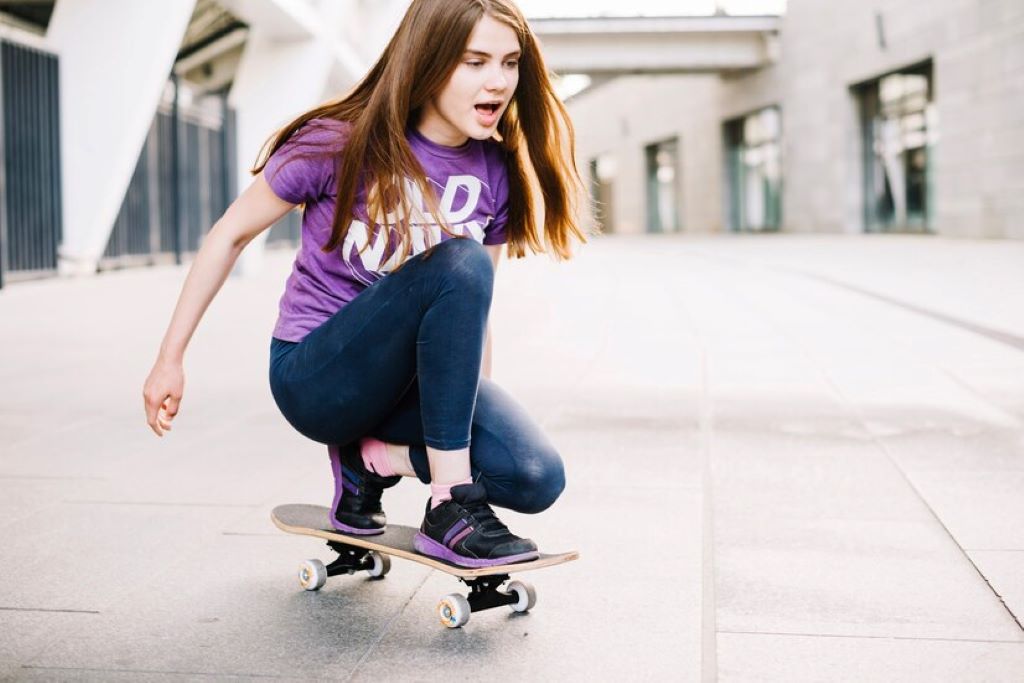
Skateboarding is one of the most creative sports in the world. However, getting started can feel confusing. There are many board types, trick styles, and riding disciplines to explore. Choosing the wrong setup can slow down your progress. Therefore, understanding your riding style first is the smartest move you can make.
This guide will help you match the right skateboard to your goals. Whether you want to cruise city streets, skate a park, or ride mountains, there is a perfect board for you.
Understanding Your Riding Style Before You Buy
Before you pick a skateboard, think about where and how you want to ride. Your riding environment shapes everything. It affects your board size, wheel hardness, and even the tricks you will learn.
Ask yourself a few simple questions. Do you want to commute around town? Do you want to do flips and jumps at a skate park? Or do you prefer the feeling of carving down hills? Your answers will point you toward the right board type.
Additionally, think about your experience level. Beginners need stable boards with a wider deck. Advanced skaters can experiment with narrower or more specialized setups. However, even experienced skaters should revisit the basics when switching styles.
Street Skating: The Most Popular Riding Style
Street skating is what most people picture when they think of skateboarding. Skaters use curbs, stairs, rails, and ledges as obstacles. The streets become their skate park.
Choosing a Board for Street Skating
Street skaters typically ride a standard popsicle-shaped deck. These boards are symmetrical, with a nose and tail that look almost the same. They are usually between 7.5 and 8.5 inches wide. A narrower deck gives you more control for technical tricks.
Trucks should be medium height. This gives you a good balance between stability and clearance for flip tricks. For wheels, choose a harder option, usually between 99A and 101A on the durometer scale. Hard wheels slide more smoothly on concrete and pavement.
Best Tricks for Street Skating
Street skating is all about technical skill. Therefore, these are the most common tricks to learn:
- Ollie: The foundation of almost every trick. You pop the tail and jump with the board.
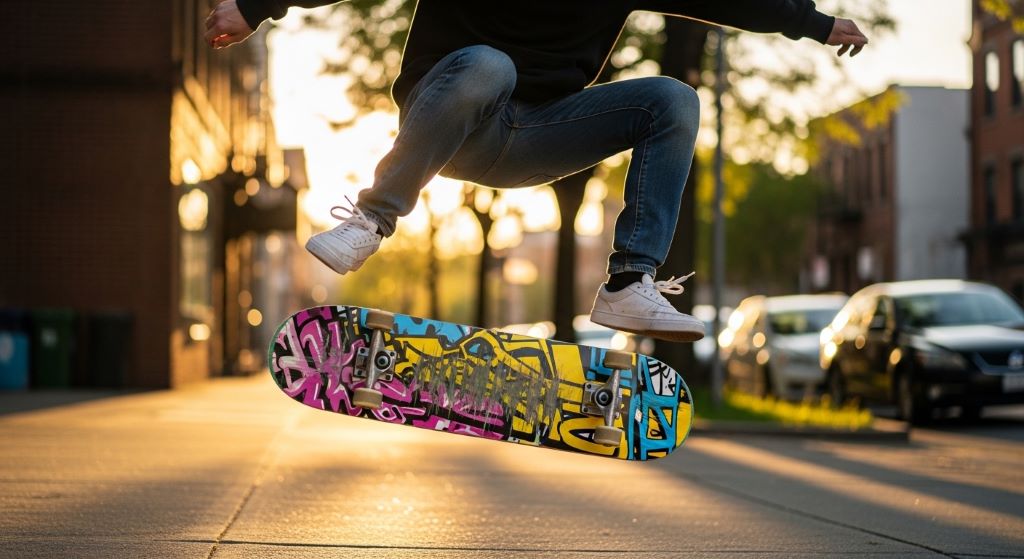
- Kickflip: The board flips once under your feet before you land.
- Heelflip: Similar to a kickflip but flipped in the opposite direction.
- Boardslide: You slide along a rail or ledge with the middle of your board.
- 50-50 Grind: Both trucks grind along a rail or edge at the same time.
Start with the ollie. Once you land it consistently, the other tricks become much easier to learn.
Park Skating: Transitions and Ramps
Park skating takes place in a skate park. Skaters use ramps, bowls, half-pipes, and quarter-pipes. This style feels very different from street skating. It focuses more on flow and speed through curved surfaces.
Choosing a Board for Park Skating
Park skaters often prefer a slightly wider deck, between 8.0 and 8.75 inches. The extra width adds stability at high speeds. It also helps when you are landing tricks on the curved surfaces of ramps.
Trucks can be standard or slightly higher. Higher trucks allow bigger wheels, which roll faster and give more momentum on transitions. Choose medium-hardness wheels, around 95A to 99A. They grip curved surfaces better than pure street wheels.
Best Tricks for Park Skating
Transitions and ramps open up a whole new world of tricks. Here are the key ones to focus on:
- Rock to Fakie: You ride up to the lip of a ramp, rock the nose over, and come back in reverse.
- Axle Stall: Both trucks rest on the lip while you pause briefly before dropping back in.
- Frontside Grind: You grind along the lip of a ramp with your trucks facing forward.
- DropIn: You start at the top of a ramp and ride down from a standing position.
- Air: You ride up the ramp, launch into the air, and land back on the transition.
Additionally, park skating teaches you about body positioning. Balance and weight distribution become very important when working with curved surfaces.
Vert Skating: High Flying and Aerial Tricks
Vert skating happens on large half-pipes and full-pipes. Skaters ride from one side to the other, gaining speed and launching high above the lip. This is one of the most dramatic forms of skateboarding.
Choosing a Board for Vert Skating
Vert requires a wider and more stable setup. Most vert skaters use decks between 8.5 and 9.5 inches wide. The extra width gives more confidence at high speeds and during big aerials.
Trucks should be wide enough to match the deck. Wheels for vert are usually medium-soft, around 95A to 98A. They need to grip the ramp surface while still rolling fast. Larger wheel diameters, from 54mm to 60mm, are also common in this style.
Best Tricks for Vert Skating
Vert is about going big. Therefore, tricks in this style tend to be dramatic and impressive:
- Frontside Air: You grab the board with your front hand while airborne above the lip.
- Backside Air: Similar to a frontside air but facing the opposite direction.
- McTwist: A 540-degree spin with a flip, named after Mike McGill.
- Kickflip Indy: You do a kickflip while grabbing the middle of the board in the air.
These tricks require a strong foundation. Do not rush into vert skating without solid park experience first.
Cruising and Longboarding: Riding for Comfort and Distance
Not everyone wants to do tricks. Many skaters simply enjoy the feeling of gliding down streets, bike paths, or hills. Cruising and longboarding focus on comfort, distance, and smooth rides.
Choosing a Board for Cruising
Cruiser boards are shorter and more compact than longboards. They work well in urban areas. They are great for getting around campus or riding through a neighborhood. A good cruiser deck is usually between 28 and 34 inches long.
Longboards are longer, ranging from 36 to 60 inches. They offer incredible stability and are ideal for downhill riding or long-distance commuting. Soft wheels, between 75A and 87A, absorb rough pavement and give a smooth ride. Larger wheel diameters, from 60mm to 75mm, also help you roll over cracks and pebbles easily.
Best Skills and Techniques for Cruising
Cruising is less about tricks and more about control and comfort. However, there are still important techniques to develop:
- Carving: You lean from side to side to make smooth, flowing turns.
- Foot Braking: You drag one foot lightly on the ground to slow down.
- Pumping: You shift your weight rhythmically to gain speed without pushing.
- Toeside and Heelside Turns: Essential for navigating corners and hills smoothly.
Additionally, cruisers can learn slide techniques for speed control on hills. However, that requires practice and safety gear.
Freestyle Skating: Old-School Creativity
Freestyle skating is one of the oldest forms of skateboarding. It takes place on flat ground and focuses on creative footwork, spins, and balance tricks. Therefore, it looks more like a dance or martial art than traditional skateboarding.
Choosing a Board for Freestyle
Freestyle boards are narrower and lighter. Most freestyle decks are between 7.0 and 7.5 inches wide. They are also symmetrical, with matching nose and tail shapes. A lighter board responds faster to footwork tricks.
Wheels are small and hard, usually 50mm to 54mm in diameter, and around 97A to 101A. Small, hard wheels allow for quick pivots and spins on smooth flat ground.
Best Tricks for Freestyle
Freestyle tricks are unique and expressive. Here are some to explore:
- Nose Manual: You balance on just the front wheels while rolling forward.
- Casper: The board flips upside down and you balance on the grip tape with one foot.
- Railstand: The board stands on its edge while you balance on top.
- Pogo: You bounce the board on its tail while standing on the trucks.
Freestyle is a great option for those who love creativity. Additionally, it builds excellent board control that transfers to other styles too.
Downhill Skateboarding: Speed Above All
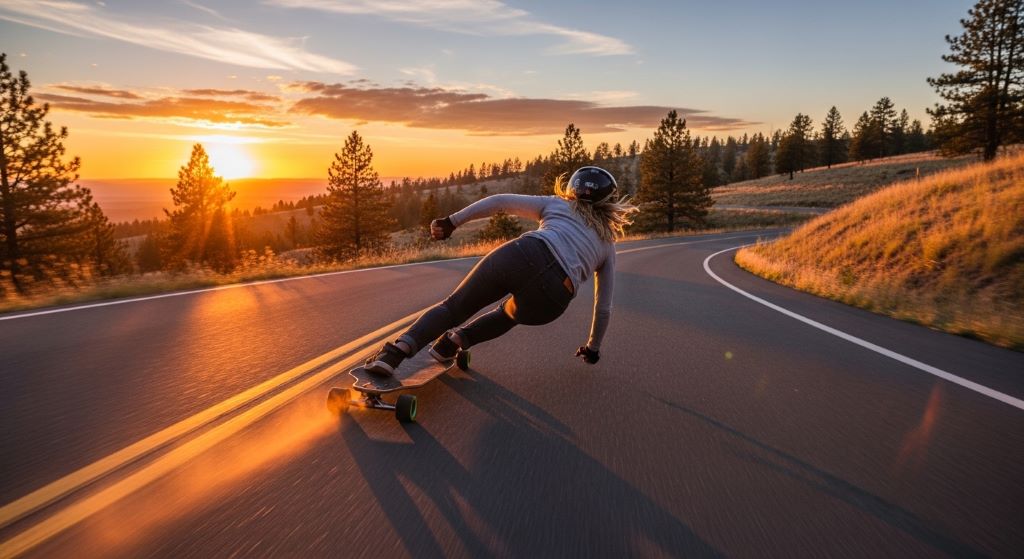
Downhill skateboarding is the fastest form of the sport. Riders tuck their bodies low and race down roads and hills at extreme speeds. This style demands full commitment and proper safety equipment.
Choosing a Board for Downhill
Downhill boards are long and very stiff. Flex in the board at high speed can cause dangerous wobbles. A deck between 38 and 43 inches long is typical. Drop-through and drop-deck designs are popular because they lower your center of gravity.
Trucks should be stiff and precise. Loose trucks cause speed wobbles. Wheels for downhill are large and soft, usually 70mm to 80mm and around 75A to 85A. Large, soft wheels maintain high speed and grip the road through corners.
Key Techniques for Downhill Riding
Speed control is the most important skill in downhill. Therefore, learn these techniques before attempting fast hills:
- Pre-drifting: You slide the back of the board slightly before a corner to control entry speed.
- Toeside Slide: A full slide across the road with your toes facing downhill.
- Heelside Slide: The opposite direction, used to scrub speed from the other side.
- Tuck Position: A crouched, aerodynamic stance to reach top speed safely.
Always wear a helmet, gloves, and knee pads when riding downhill. No trick or speed record is worth a serious injury.
Matching Tricks to Your Personality and Goals
Every riding style has a unique personality behind it. Street skating attracts those who love technical challenges. Park and vert skating appeal to those who want to fly through the air. Cruising suits people who want relaxation and transportation. Freestyle is perfect for creative thinkers. Downhill draws speed lovers and thrill seekers.
Therefore, think about what draws you to skateboarding in the first place. Your motivation will naturally match one of these disciplines. However, there is nothing stopping you from trying all of them over time. Many experienced skaters blend styles and techniques from multiple disciplines.
Conclusion
Choosing the right skateboard type and tricks depends entirely on your riding style and goals. Street skating needs a narrow, hard-wheeled popsicle board and technical flip tricks. Park and vert skating require wider decks, faster wheels, and aerial skills. Cruising and longboarding call for soft wheels and a relaxed approach. Freestyle demands a light, narrow board and creative footwork. Downhill riding needs a stiff, long board with careful speed control techniques.
Additionally, remember that no choice is permanent. You can always switch styles as your skating grows. The most important thing is to get on a board that excites you. Start with the style that matches your lifestyle, practice consistently, and enjoy every moment of the ride.
Frequently Asked Questions
1. What is the best skateboard type for a complete beginner?
A standard popsicle deck between 8.0 and 8.25 inches wide is ideal for beginners. It is versatile enough for both street and park skating. Pair it with medium-hardness wheels and standard trucks for a stable, forgiving setup.
2. Can I do street tricks on a longboard?
Traditional street tricks like kickflips and grinds are not designed for longboards. However, longboards are excellent for carving, dancing, and sliding techniques. If you want to do flip tricks, a standard skateboard is the better choice.
3. How do I know which wheel hardness is right for me?
Softer wheels, from 75A to 87A, are best for cruising and rough surfaces. Medium wheels, from 88A to 97A, suit park and transition skating. Hard wheels, from 99A to 101A, are ideal for street skating on smooth concrete.
4. Is it possible to learn multiple skateboarding styles at once?
Yes, but it can slow your progress in each area. It is better to focus on one style until you feel confident. Then you can explore another discipline. Many skaters find that skills from one style actually help them in another.
5. What safety gear do I need for skateboarding?
At a minimum, always wear a certified helmet. For park and vert skating, add knee pads and elbow pads. Downhill riders should also wear full-face helmets and thick leather gloves for slide protection. Wrist guards are highly recommended for beginners across all styles.
Related Topics:
Kickflip Skateboard Trick: Skateboarding’s Most Iconic Trick
Casper Flip Skateboard Trick: A Gravity-Defying Fusion of Style and Skill