Skateboarding feels alive when your board responds exactly the way you want it to. One small part makes a huge difference in that experience — the bushing. Most riders focus on decks, wheels, and bearings, but bushings quietly control how your trucks turn and how stable your ride feels. Choosing the right ones can completely transform your skating.
This guide walks you through everything you need to know about skateboard bushings. By the end, you will know how to pick the perfect pair for your riding style.
What Are Skateboard Bushings and Why Do They Matter?
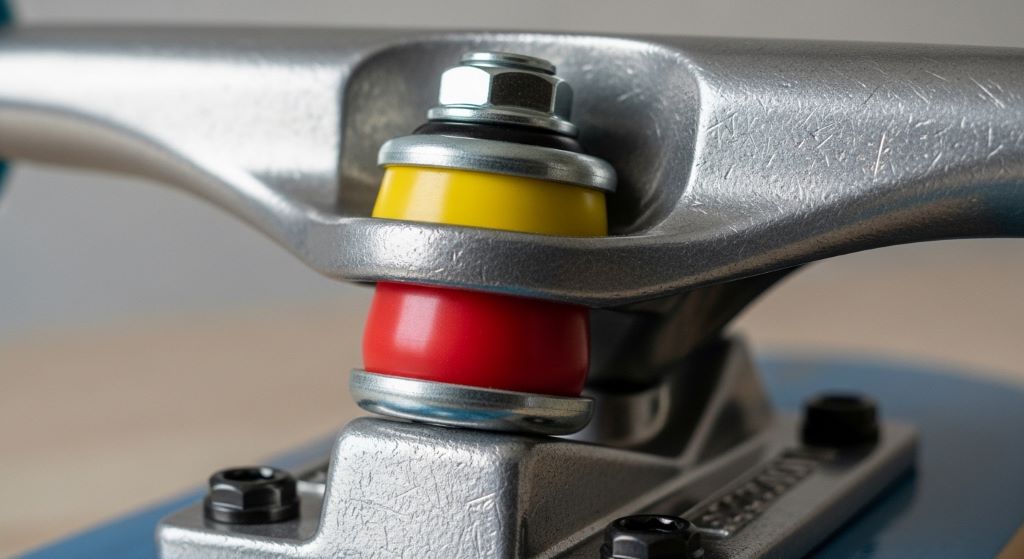
Bushings are small, cylindrical pieces of urethane that sit inside your trucks. They wrap around the kingpin and sit between the hanger and the baseplate. When you lean your board, the bushings compress and then push back, returning the truck to its original position.
They are tiny, but their impact is massive. Stiff bushings resist turning and give you a stable, locked-in feel. Soft bushings allow quick, fluid turns and are perfect for carving smooth paths. The right durometer — the hardness rating — can make your board feel completely different without changing any other part.
Additionally, worn-out or wrong-sized bushings lead to wheel bite, speed wobbles, and poor carving control. Therefore, understanding bushings is not optional. It is essential.
Understanding Bushing Durometer (Hardness)
Durometer is measured on the “A” scale. A lower number means softer urethane. A higher number means stiffer urethane. Most skateboard bushings fall between 78A and 100A.
Here is a simple breakdown to help you decide:
- 78A–85A: Very soft. Great for heavy carving, cruising, and slalom skating. These respond easily to small weight shifts.
- 86A–90A: Medium soft. A balanced choice for street skating mixed with some carving.
- 91A–96A: Medium stiff. Good for technical tricks and moderate speed.
- 97A–100A: Stiff. Best for high speeds, parks, and riders who want minimal truck movement.
However, durometer alone does not tell the whole story. Your weight plays a major role in how a bushing feels under pressure.
How Your Weight Affects Bushing Choice
Bushing feel depends entirely on how much force is pressing against it. A 90A bushing feels very different under a 130-pound rider compared to a 200-pound rider.
As a general guide:
- Riders under 130 lbs (59 kg): Choose 78A–87A
- Riders 130–170 lbs (59–77 kg): Choose 87A–92A
- Riders 170–200 lbs (77–91 kg): Choose 92A–96A
- Riders over 200 lbs (91+ kg): Choose 96A–100A
These are starting points, not rules. Your riding style matters just as much. Therefore, if you ride aggressively and want extra responsiveness, go one step softer than the chart suggests.
Different Bushing Shapes and What They Do
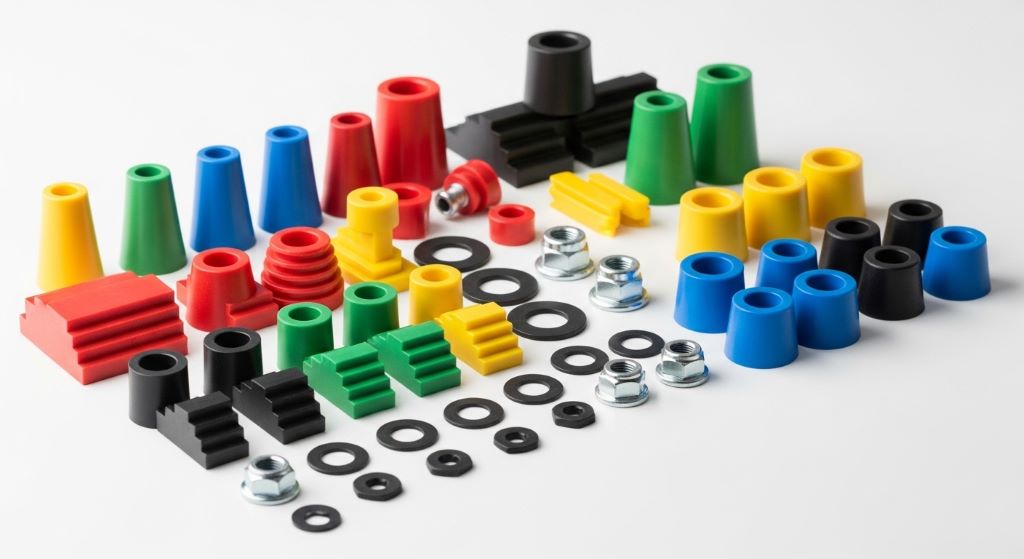
Shape affects how a bushing responds across its range of motion. There are several common shapes, each with unique characteristics.
Cone Bushings
Cone bushings taper toward one end. They offer a lot of lean and turn easily. Many riders place them on the road-side of the truck, which is the side closer to the ground. This setup allows for deep carves and smooth pivots.
Barrel Bushings
Barrel bushings are cylindrical with a consistent diameter. They provide more resistance and return quickly to center after a turn. They work well on the board-side of the truck, offering stability while still allowing movement.
Eliminator Bushings
Eliminator bushings have a wide, flat shape. They limit extreme lean and are popular among downhill riders who need maximum stability at high speeds. However, they reduce carving ability significantly.
Stepped Bushings
Stepped bushings combine features of cone and barrel shapes. They feel loose at first but stiffen up as the lean increases. This progressive feel suits riders who want both responsiveness and control in one package.
Many riders mix shapes — a cone on the roadside and a barrel on the boardside — to fine-tune their trucks. This combination is extremely popular among longboarders and carvers.
Choosing Bushings for Specific Riding Styles
Your skating goals should guide your bushing selection. Different disciplines demand very different setups.
Carving and Cruising
Carving is all about flowing turns and pumping momentum. For this style, you want soft to medium-soft bushings with cone or barrel shapes. A durometer between 78A and 87A gives you the lean you need to make long, sweeping turns. Additionally, loose trucks help you pump energy from each turn.
Street Skating
Street skating involves flip tricks, grinds, and manual balance. Therefore, you need a more stable setup. Medium to medium-stiff bushings in the 88A–93A range work well here. They prevent your trucks from wobbling during landing and give you consistent response on flat surfaces.
Downhill and Speed Riding
Speed wobbles are dangerous. Stiff bushings in the 93A–100A range keep your trucks from oscillating at high speeds. Eliminator or double-barrel setups are common choices among downhill riders. However, sacrificing turn radius for stability is a necessary trade-off at this level.
Freestyle and Dance Longboarding
Freestyle and dance require fluid movement and easy weight shifting. Soft cone bushings let your board tilt and pivot smoothly beneath you. A setup in the 78A–85A range gives you the freedom of movement these styles demand.
The Role of Bushing Seat and Washers
Bushings do not work alone. The washer shape and the truck’s bushing seat also affect how the urethane compresses.
Cup washers restrict how far a bushing can expand outward. They create a tighter, more controlled feel. Flat washers allow the bushing to spread more freely, resulting in a looser response.
The bushing seat is the channel inside the truck that holds the bushing in place. A deep seat restricts movement. A loose or open seat gives more range of motion. Some premium trucks feature adjustable or removable seats, which gives you even more tuning options.
Therefore, when upgrading bushings, always pay attention to the washer setup. Sometimes swapping washers alone can change your ride feel dramatically.
Top Bushing Brands Worth Knowing
Not all urethane is equal. Premium brands use better formulas that hold their shape longer, rebound faster, and feel more consistent.
Bones Bushings are made from high-quality urethane and come in a wide range of durometers. They are reliable and widely available. Venom Bushings offer an excellent variety of shapes and durometers, and are particularly popular among longboarders. Riptide Bushings use a proprietary urethane formula that many carvers praise for its lively, energetic rebound. Furthermore, Independent and Thunder both produce decent stock bushings, though many riders upgrade these fairly quickly.
How to Know When Your Bushings Need Replacing
Bushings wear out over time. Fortunately, they are easy to inspect. Signs that it is time to replace your bushings include:
- Cracks or tears in the urethane
- Flat spots where the bushing has been compressed unevenly
- The truck no longer returns to center after a turn
- Speed wobbles that were not there before
- A noticeable squishing or squishy feel under your feet
Replacing bushings costs very little. However, ignoring worn bushings leads to poor performance and, in some cases, unsafe riding conditions.
Step-by-Step: How to Install and Tune Your Bushings
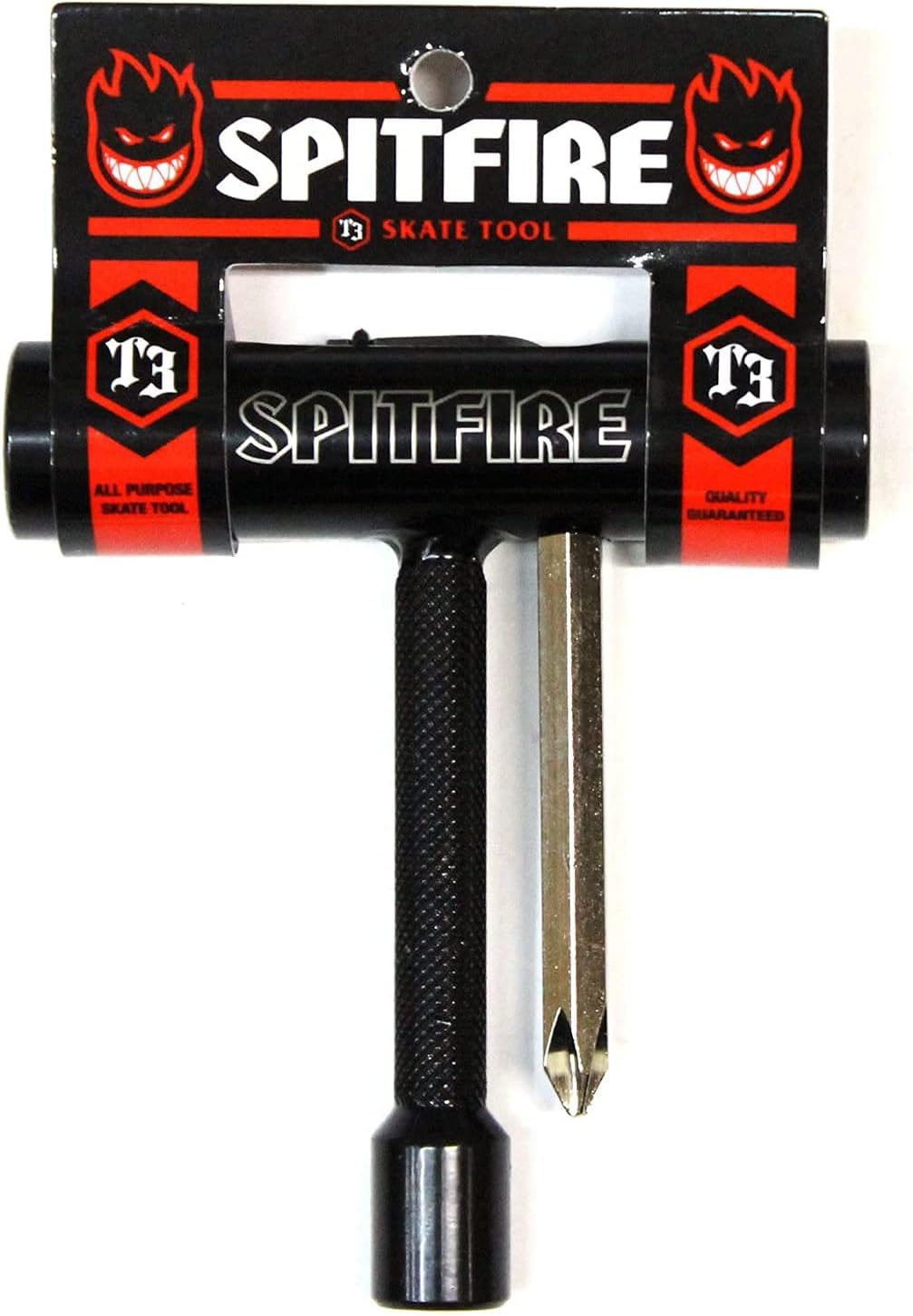
Installing bushings is simple. You only need a skate tool or a socket wrench.
First, loosen and remove the kingpin nut. Then slide off the old washer, bushing, and hanger. Replace the bushings in the correct order — washer, bushing, hanger, bushing, washer — and tighten the kingpin nut. Do not overtighten at first.
Next, stand on your board and test the turn response. If the trucks feel too stiff, loosen the kingpin nut slightly. If they feel too loose and unstable, tighten it. Additionally, new bushings need a short break-in period. Ride them for a session or two before making final adjustments.
Conclusion
Choosing the right skateboard bushings is one of the most effective ways to improve your carving and overall control. Durometer, shape, your weight, and your riding style all work together to create your ideal setup. Soft bushings open up deep carves, while stiffer ones give you the stability you need for speed and technical tricks.
Start with a durometer that matches your weight and style. Then experiment with shapes and washer combinations until your trucks feel exactly right. Additionally, replace worn bushings regularly to maintain consistent performance.
Bushings are small, affordable, and incredibly powerful. Once you dial them in, every ride will feel smoother, more connected, and more enjoyable.
Frequently Asked Questions
What durometer bushing should a beginner start with?
Most beginners do well with a medium-soft bushing around 87A–90A. This range offers enough stability for learning while still allowing comfortable turning. However, adjust based on your weight and comfort level after a few sessions.
Can I use different durometers on the front and back trucks?
Yes, and many experienced riders do exactly this. A softer bushing up front makes turning easier, while a slightly stiffer bushing in the rear adds stability. This setup is especially popular among carvers and longboarders.
How often should I replace my skateboard bushings?
There is no fixed schedule, but most active riders replace bushings every three to six months. If you notice cracks, flat spots, or a change in truck response, replace them immediately regardless of how recently you installed them.
Do bushings affect wheel bite?
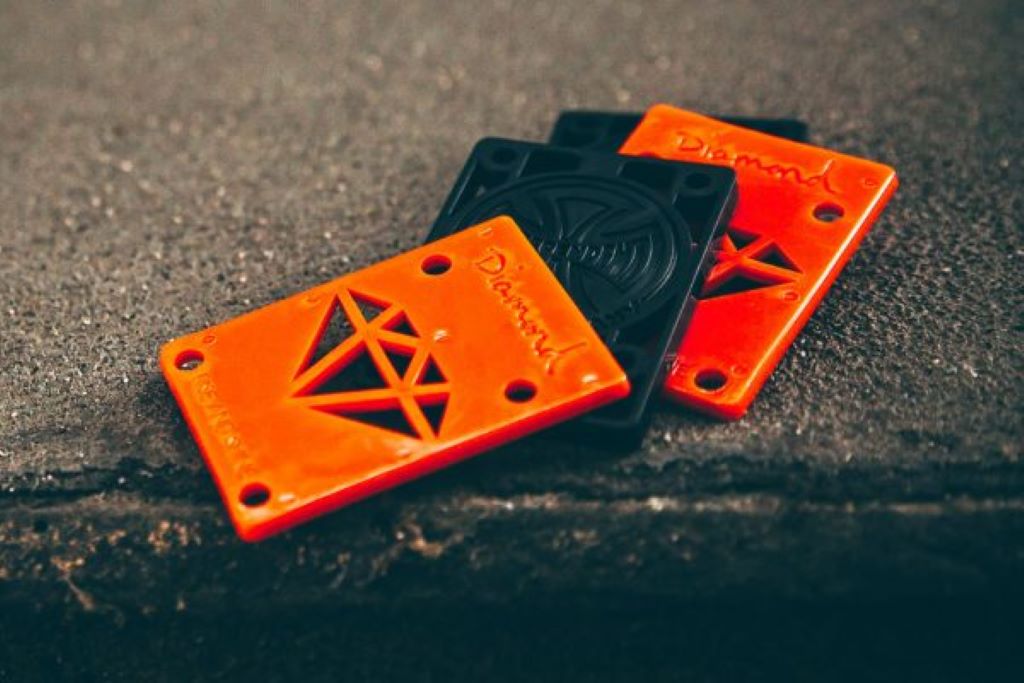
Yes. Loose or very soft bushings allow more truck lean, which can bring your wheels closer to the deck. If you experience wheel bite after installing softer bushings, you may need to raise your deck with risers or tighten your kingpin nut slightly.
Are expensive bushings worth it?
Premium bushings from brands like Riptide or Venom use higher-quality urethane that lasts longer and performs more consistently. For most riders, the difference in cost is small and the improvement in feel is noticeable. Therefore, upgrading from stock bushings is generally worth the investment.
Related Topics:
Triple Eight Dual Certified MIPS Bike and Skateboard Helmet: A Comprehensive Guide to Unrivaled Protection
Elevate Your Roll: Bones Swiss Skate Speed Cream + Cleaning Unit Kit – A Deep Dive