If you are new to skateboarding, start with simple balance based tricks before attempting advanced moves. The easiest beginner tricks include the Tic Tac, Kick Turn, Manual, and Hippie Jump because they build confidence without requiring difficult aerial skills.
Nearly 85% of beginner skateboarders improve faster when they master foundational tricks first. Moreover, learning easy movements develops balance, board control, and coordination that support every future skateboarding skill.
Why Beginners Should Start With Easy Skateboarding Tricks
Many new skaters rush toward impressive tricks and become frustrated quickly. However, simple tricks create the foundation needed for long term progress.
Balance, timing, and confidence matter more than flashy movements initially. Therefore, mastering basic techniques helps beginners stay motivated and avoid unnecessary falls.
Easy tricks also teach how the board reacts under pressure. As a result, every practice session becomes more productive and enjoyable.
Essential Safety Tips Before Learning Tricks
Before practicing any trick, prepare yourself properly. Good habits reduce injuries and improve learning speed.
Follow these important guidelines:
: Wear a certified skateboarding helmet
: Use knee pads and elbow pads
: Choose smooth and flat pavement
: Inspect your skateboard regularly
: Practice in open areas without traffic
: Warm up your ankles and legs
Additionally, spend several minutes riding comfortably before attempting tricks. This preparation helps your body respond naturally.
1. The Tic Tac
The Tic Tac is often the first real skateboard trick beginners learn. It teaches board control while helping you move forward.
Start by riding slowly on flat ground. Then rotate the front wheels slightly left and right.
Use your shoulders to guide the movement smoothly. Consequently, the board gains momentum without pushing your foot.
Practice short turns first before increasing speed. Eventually, the movement feels natural and effortless.
Why It Helps
The Tic Tac improves steering control and balance. Furthermore, it prepares you for many turning based tricks.
2. The Kick Turn
A Kick Turn teaches how to pivot the board quickly. Many skateboarders use it daily while riding.
Place your back foot on the tail firmly. Next, apply gentle pressure to lift the front wheels slightly.
Turn your shoulders toward the desired direction. Meanwhile, allow the board to rotate underneath you.
Keep movements small during early attempts. Later, increase the turning angle as confidence grows.
Why It Helps
Kick Turns improve maneuverability dramatically. Additionally, they introduce the concept of lifting the front truck.
3. The Manual
A Manual resembles a wheelie on a bicycle. It requires balance rather than speed or strength.
Ride slowly across a smooth surface. Then shift your weight carefully toward the back foot.
Lift the front wheels a few inches. Afterward, focus on maintaining balance for several seconds.
Small adjustments keep the board stable. Therefore, patience becomes more important than distance.
Why It Helps
Manuals improve balance awareness significantly. Moreover, they strengthen the control needed for advanced tricks.
4. The Nose Manual
The Nose Manual reverses the traditional Manual position. Instead, the front wheels remain on the ground.
Move your weight toward the front truck carefully. Then lift the rear wheels slightly.
Maintain a relaxed body posture throughout the movement. Consequently, balance corrections become easier.
Practice on smooth pavement initially. Soon, you will feel more comfortable shifting weight forward.
Why It Helps
This trick develops front foot control. Furthermore, it increases overall board awareness.
5. The Hippie Jump
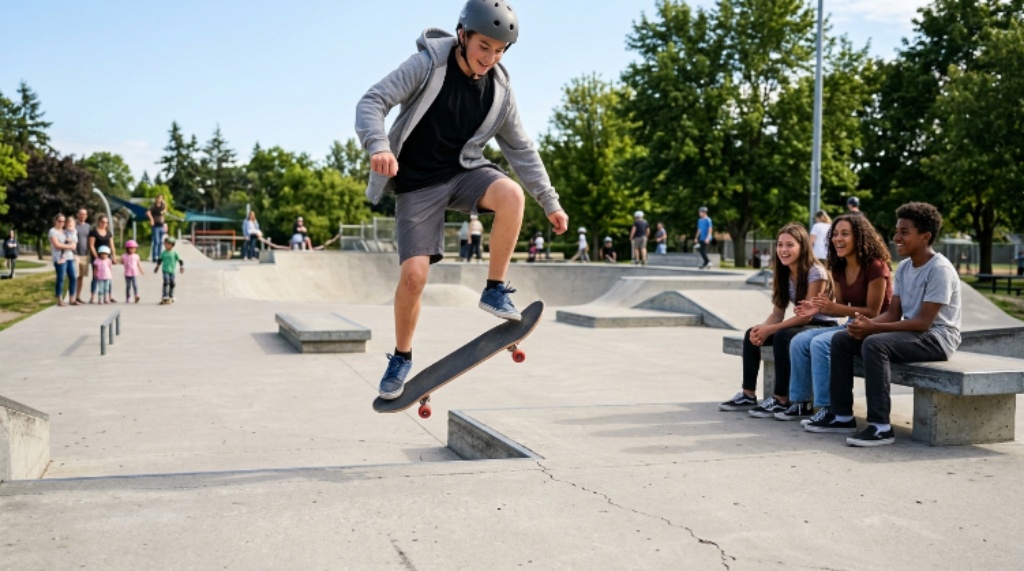
The Hippie Jump looks impressive despite being simple. Surprisingly, the skateboard never leaves the ground.
Ride at a comfortable speed. Then bend your knees slightly before jumping straight upward.
Allow the board to continue rolling beneath you. Next, land back on the deck smoothly.
Focus on staying centered during the jump. As a result, landings become more consistent.
Why It Helps
The Hippie Jump builds confidence with board movement. Additionally, it prepares beginners for future jumping tricks.
6. The Caveman
The Caveman begins with stepping onto a moving skateboard. It feels exciting while remaining beginner friendly.
Hold the board in one hand while walking. Then drop it gently onto the ground.
Jump onto the deck immediately afterward. Meanwhile, keep your knees bent for stability.
Start at very slow speeds initially. Eventually, your timing will improve naturally.
Why It Helps
The Caveman teaches coordination and commitment. Therefore, it helps reduce hesitation during trick practice.
7. The Boneless Step
The Boneless Step is a simplified version of the classic Boneless trick. Beginners can learn it safely.
Place your front foot on the ground briefly. Then lift the board slightly using your hand.
Step back onto the board smoothly. Afterward, continue rolling forward naturally.
Focus on rhythm rather than height. Consequently, the movement becomes cleaner and more controlled.
Why It Helps
This trick improves coordination between hands and feet. Moreover, it introduces creative movement patterns.
8. The Shove It Step Practice
The full Shove It can challenge beginners. However, practicing the stepping version builds useful skills.
Stand still on your skateboard first. Then gently spin the board beneath you.
Watch how the deck rotates naturally. Next, step off and repeat several times.
Understanding board rotation reduces fear significantly. Therefore, future Shove It attempts feel less intimidating.
Why It Helps
Board awareness improves quickly through repetition. Furthermore, beginners learn how rotational tricks behave.
9. The Tail Stop
The Tail Stop teaches control when ending a ride. Many experienced skaters use it regularly.
Ride slowly across a flat area. Then press the tail gently against the pavement.
Allow the board to slow gradually. Meanwhile, keep your weight balanced over the deck.
Avoid applying excessive pressure initially. As a result, control remains predictable.
Why It Helps
Stopping safely matters as much as moving. Additionally, this skill improves tail control.
10. The Monster Walk
The Monster Walk is playful yet valuable. It develops confidence while moving around the board.
Stand on the skateboard comfortably. Then step around different deck positions carefully.
Move one foot at a time. Next, maintain balance during each transition.
Practice slowly and deliberately. Consequently, your comfort level increases dramatically.
Why It Helps
The Monster Walk improves foot placement awareness. Furthermore, it makes board movement feel less intimidating.
Common Beginner Mistakes To Avoid
Many beginners make similar errors during practice. Fortunately, most are easy to correct.
Watch out for these mistakes:
: Looking down constantly
: Practicing advanced tricks too early
: Standing too stiffly
: Ignoring protective equipment
: Skipping basic riding practice
: Training when overly tired
Instead, focus on consistency and patience. Over time, improvement arrives faster than expected.
A Simple Practice Plan
A structured routine helps beginners progress steadily. Therefore, organize each session intentionally.
Try this sequence:
: Five minutes of riding
: Five minutes of Tic Tacs
: Five minutes of Kick Turns
: Five minutes of Manuals
: Five minutes of Hippie Jumps
: Five minutes reviewing favorite tricks
This approach develops multiple skills simultaneously. Moreover, it keeps practice sessions engaging.
How Long Does It Take To Learn These Tricks?
Most beginners learn several tricks within a few practice sessions. However, progress depends on consistency.
Some skaters master a Tic Tac in one day. Others may need several weeks for Manuals.
The key factor is regular practice. Therefore, focus on improvement rather than speed.
Conclusion
Learning skateboarding becomes much easier when you start with simple, confidence building tricks. The Tic Tac, Kick Turn, Manual, Hippie Jump, and other beginner friendly moves create a strong foundation for future progression.
Grab your skateboard, practice consistently, and focus on control before difficulty. Every great skateboarder started with basic tricks, and your first breakthrough could happen today.
FAQs
What is the easiest skateboard trick for beginners?
The Tic Tac is usually the easiest skateboard trick for complete beginners.
Can adults learn beginner skateboard tricks?
Yes, adults can learn these beginner tricks successfully with regular practice.
How often should beginners practice skateboarding?
Three to five practice sessions weekly helps most beginners improve steadily.
Do I need a skatepark to learn these tricks?
No, a smooth and open flat surface works perfectly for beginner tricks.
Which trick should I learn after these basics?
After mastering these tricks, many beginners move toward the Ollie.