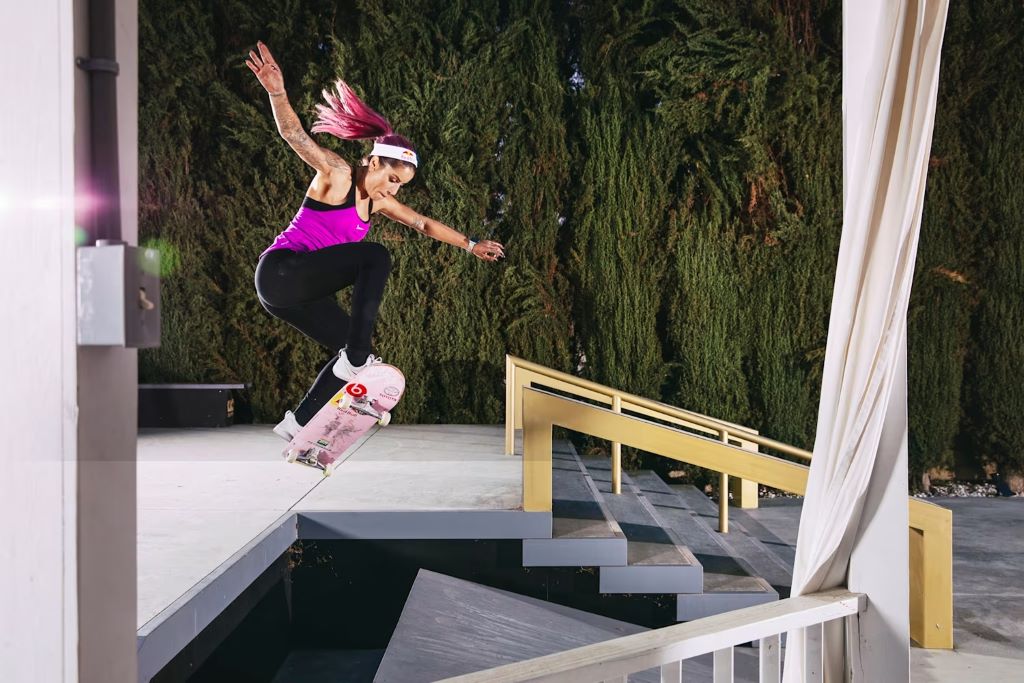
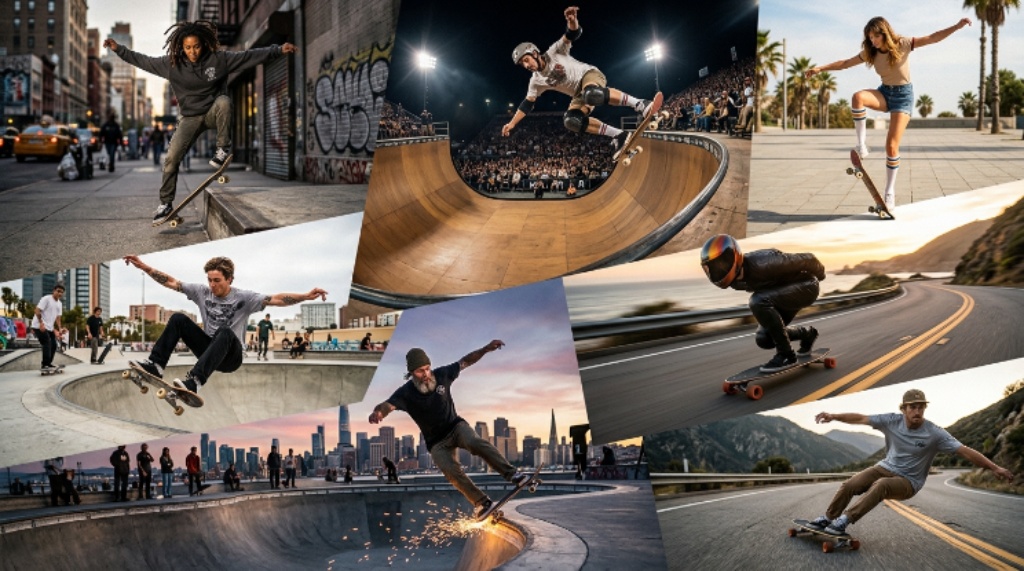
The skateboarding styles that create history are street skating, vert skating, freestyle, downhill, slalom, park skating, cruising, bowl riding, longboarding, and technical flatground skating. Each style pushed boundaries, inspired generations, and changed how people view skateboarding culture. Together, these approaches transformed a simple board into a global movement.
Skateboarding continues to influence sports, fashion, music, and youth culture worldwide. Industry reports estimate millions of active skateboarders participate across different disciplines annually. Moreover, major international competitions attract huge audiences and increase interest among new riders.
What makes a skateboarding style historically significant is its impact on progression. Some styles introduced new tricks, while others changed equipment design. As a result, skateboarding evolved from a recreational activity into a respected competitive sport.
Why Skateboarding Styles Matter
Every skateboarding style represents a different approach to movement and creativity. Riders develop unique techniques based on terrain and goals. Consequently, each discipline contributes something valuable to skateboarding history.
Different styles also influence board construction and safety equipment. Manufacturers respond to rider demands with specialized designs. Therefore, innovation often begins with the needs of dedicated skateboarders.
Historical styles shape future generations of athletes and enthusiasts. New riders often learn from legendary pioneers. In turn, they add fresh ideas and continue the cycle of progression.
1. Street Skating
Street skating remains one of the most influential skateboarding styles ever created. Riders use urban environments as natural obstacle courses. As a result, creativity becomes a central part of the experience.
Common street features include rails, stairs, ledges, and curbs. Skaters transform ordinary locations into performance spaces. Consequently, street skating connects closely with everyday city life.
Key contributions:
: Popularized technical flip tricks
: Expanded global skateboarding culture
: Inspired countless professional careers
: Increased accessibility for beginners
2. Vert Skating
Vert skating takes place on large vertical ramps and halfpipes. Riders launch high above coping and perform aerial maneuvers. Therefore, this style often delivers some of skateboarding’s most dramatic moments.
During its growth, vert skating pushed physical limits significantly. Athletes developed advanced spins and grabs. Furthermore, competitions showcased incredible skill and courage.
Many iconic skateboarding legends emerged through vert skating. Their achievements attracted mainstream attention. Consequently, skateboarding gained broader public recognition.
3. Freestyle Skating
Freestyle skating focuses on technical tricks performed on flat surfaces. Riders execute complex movements without relying on obstacles. Therefore, balance and precision become essential skills.
Early skateboarding competitions frequently featured freestyle routines. Participants combined creativity with technical mastery. As a result, freestyle established many foundational techniques.
Modern street skating still uses concepts from freestyle skating. Numerous advanced tricks originated from this discipline. Consequently, its influence remains significant today.
4. Downhill Skating
Downhill skating emphasizes speed, control, and strategic maneuvering. Riders descend steep roads while maintaining stability. Therefore, confidence and experience play critical roles.
This style requires specialized equipment and protective gear. High speeds increase both excitement and risk. Nevertheless, skilled riders develop remarkable control through practice.
Downhill events continue attracting dedicated communities worldwide. Competitors constantly refine techniques for greater efficiency. As a result, performance standards continue improving.
5. Slalom Skating
Slalom skating challenges riders to navigate closely spaced cones. Quick turns and precise movements define this discipline. Consequently, agility becomes the primary focus.
Competitive slalom demands excellent timing and coordination. Riders learn to maintain speed through efficient movement. Furthermore, consistency often determines success.
Although less publicized, slalom significantly influenced board design. Its technical demands encouraged innovation. Therefore, its historical importance remains undeniable.
6. Park Skating
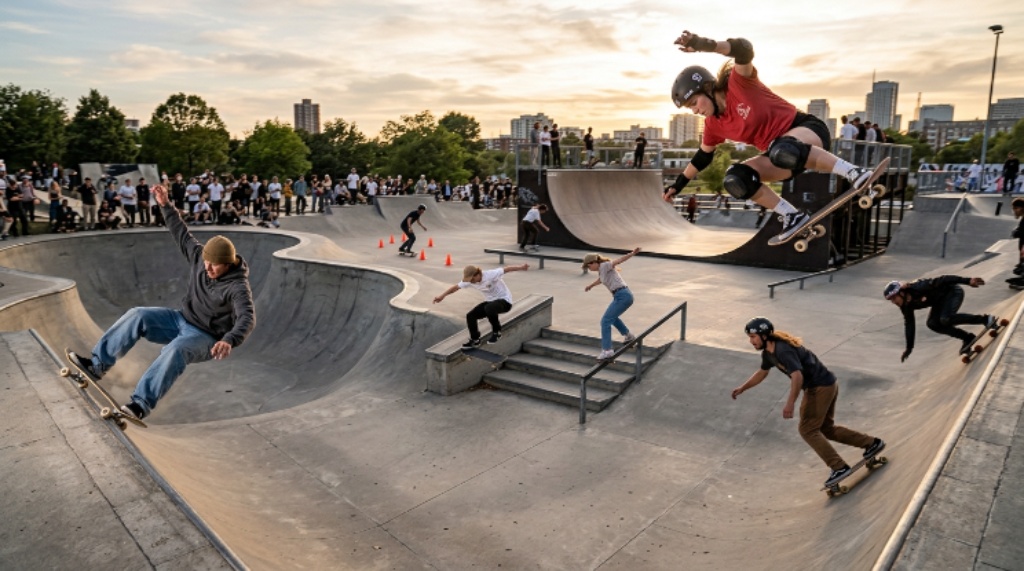
Park skating combines elements from multiple skateboarding disciplines. Riders use purpose built facilities featuring ramps and transitions. As a result, versatility becomes highly valuable.
Modern skateparks encourage experimentation and progression. Skaters practice diverse tricks within controlled environments. Consequently, learning opportunities increase substantially.
Many competitive events now feature park skating formats. Spectators enjoy continuous action and creativity. Therefore, this style continues growing in popularity.
7. Cruising
Cruising focuses on transportation, enjoyment, and smooth movement. Riders travel comfortably through streets and pathways. Consequently, accessibility attracts a wide audience.
Unlike competitive disciplines, cruising emphasizes practical use. Many people begin skateboarding through this style. Therefore, cruising often serves as an entry point.
The growth of cruising expanded skateboarding’s appeal significantly. More individuals discovered the benefits of riding. As a result, participation increased across many communities.
8. Bowl Riding
Bowl riding developed from empty swimming pools and curved structures. Riders generate speed through flowing transitions. Therefore, rhythm becomes a defining characteristic.
This style rewards smooth lines and continuous movement. Skilled riders connect tricks naturally throughout a run. Furthermore, creativity often separates exceptional performances.
Bowl riding strongly influenced modern park design. Many skateparks incorporate bowl features today. Consequently, its legacy remains visible everywhere.
9. Longboarding
Longboarding uses longer boards designed for stability and comfort. Riders enjoy smoother experiences across various surfaces. Therefore, this style appeals to diverse skill levels.
Longboarding includes several specialized disciplines:
: Freeriding
: Distance riding
: Downhill racing
: Dancing
: Commuting
Its versatility contributed to widespread popularity. Many people appreciate its approachable learning curve. As a result, longboarding expanded skateboarding participation significantly.
10. Technical Flatground Skating
Technical flatground skating centers on advanced tricks performed without obstacles. Riders combine flips, spins, and intricate footwork. Consequently, precision becomes absolutely essential.
This discipline showcases pure board control and creativity. Complex combinations require extensive practice and discipline. Therefore, successful execution demonstrates exceptional skill.
Many modern competitive routines include technical flatground elements. Judges often reward difficulty and consistency. As a result, this style continues influencing contemporary skateboarding.
Common Traits Shared by Historic Skateboarding Styles
Despite their differences, influential skateboarding styles share several characteristics. Each style encouraged innovation and self expression. Consequently, they shaped skateboarding culture beyond competition.
Historic styles typically offer:
: Creative freedom
: Technical progression
: Community development
: Equipment innovation
: Cultural influence
These qualities help explain their lasting impact. Furthermore, they continue inspiring new generations of riders worldwide.
How These Styles Continue Shaping Modern Skateboarding
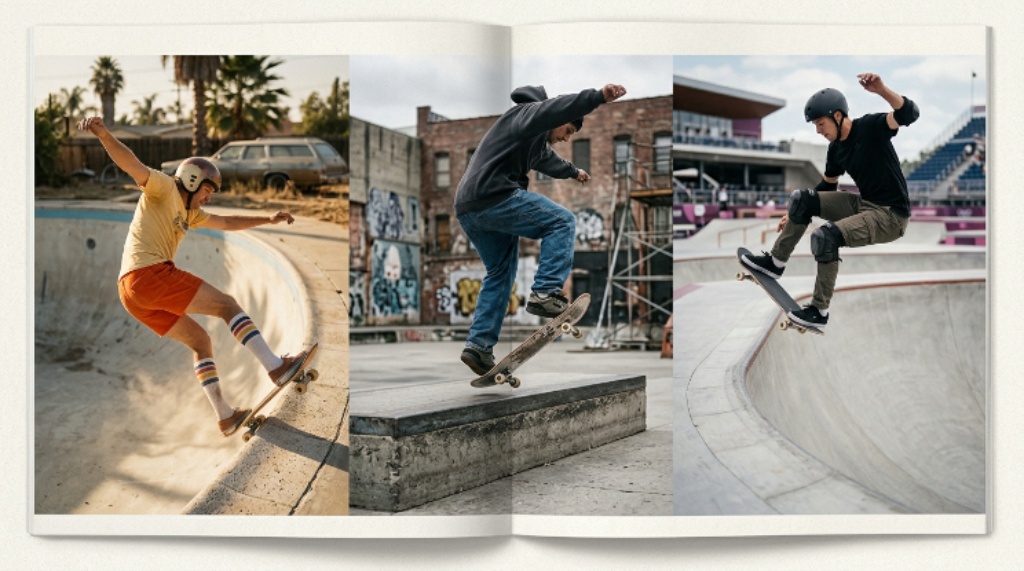
Modern skateboarding blends elements from multiple historical disciplines. Riders borrow techniques and ideas across styles. Therefore, progression occurs faster than ever before.
Technology also supports continued development and accessibility. Better equipment helps riders learn safely and efficiently. Consequently, participation continues expanding across different age groups.
Social media further accelerates the spread of innovation. Skaters share tricks and techniques instantly. As a result, global communities remain closely connected.
Lessons New Skateboarders Can Learn From History
Studying historical skateboarding styles provides valuable insights. Riders understand how techniques evolved over time. Therefore, learning becomes more meaningful and structured.
Beginners should explore several disciplines before specializing. Different styles develop different skills and perspectives. Consequently, overall improvement becomes more balanced.
Patience remains essential regardless of chosen discipline. Progress often comes through consistent practice and persistence. Furthermore, every great skateboarder started with basic fundamentals.
Conclusion
The ten skateboarding styles that created history transformed a simple pastime into a global cultural force. From technical freestyle routines to high speed downhill runs, each discipline contributed unique innovations and unforgettable moments. Understanding these styles helps riders appreciate skateboarding’s rich heritage while building skills for the future.
Start exploring different skateboarding styles today, learn from their history, and discover which discipline best matches your goals and personality.
FAQs
Which skateboarding style is best for beginners?
Cruising is often the easiest style for beginners because it focuses on balance and smooth riding.
What is the most influential skateboarding style?
Street skating is widely considered the most influential due to its global cultural impact.
Is vert skating dangerous?
Vert skating involves higher risks because riders perform aerial tricks on large ramps.
Can one skateboard be used for all styles?
A general skateboard works for several styles, but specialized boards improve performance.
Why is freestyle skateboarding important?
Freestyle introduced many foundational techniques that influenced modern skateboarding tricks.